Mission
The Research Program on Global Health and Human Rights serves as a forum for UConn’s scholarly community interested in global health, human rights, and health inequities. This program is an integral part of the Gladstein Family Human Rights Institute, seeking to understand human rights-based approaches to health challenges.
Research
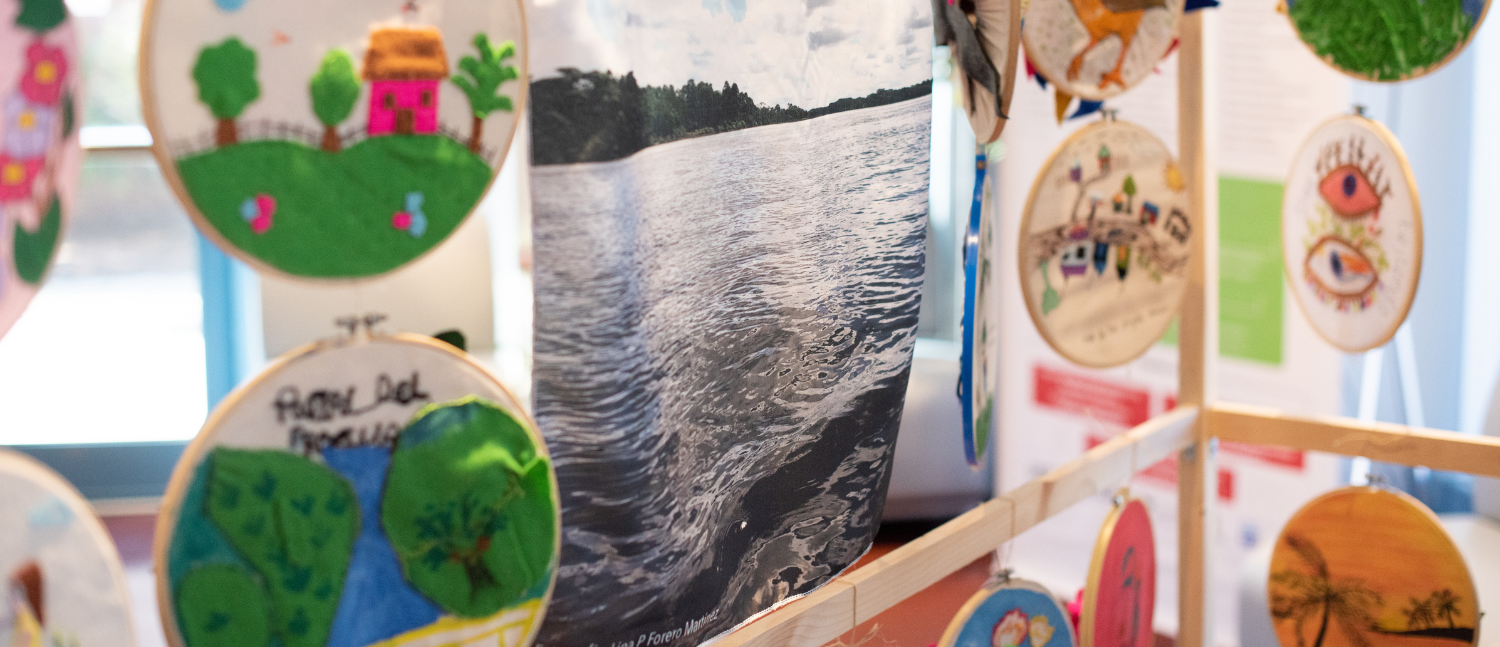
Buen Vivir and Collective Healings
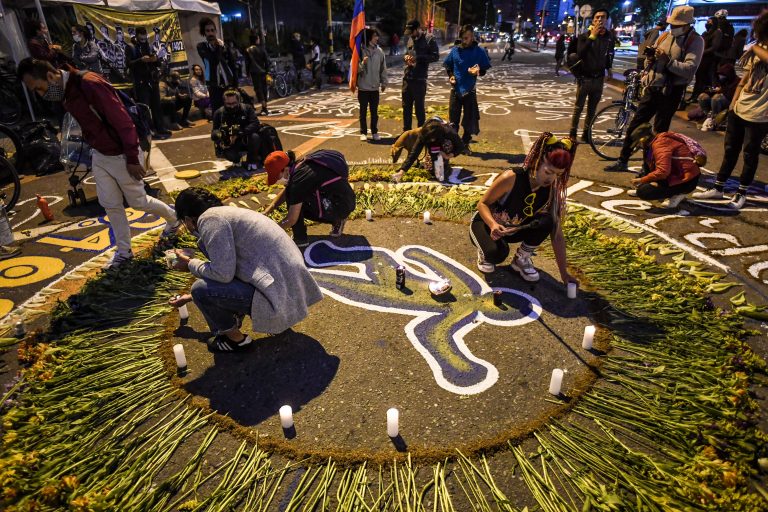
Intercultural and interdisciplinary good humans learning network that interrogates the kind of healing that happens beyond the individual body to include human collectives, inter-species beings, and ecologies. It centers on the wounds that are historical, collective, and ecological and continue to disrupt Indigenous epistemologies. Grounded in ancestral knowledges and stewardship, this good humans learning network draws inspiration from rituals, spirituality, communalism, social movements and decoloniality to support forms of healing that take histories and collective subjectivities of oppression at their core. Learn more about Buen Vivir and Collective Healings.
Pandemic Journaling Project
PJP was created in Spring 2020 as an online journaling platform and interdisciplinary research study of how people around the world were experiencing the COVID-19 pandemic. The project, which ran May 2020-May 2022, offered a digital space where participants could create weekly journals of their COVID-19 experiences. With over 1,800 participants in 55 countries, the project is rooted in a human rights-based commitment to democratizing knowledge production. Since the conclusion of PJP’s first phase, it continues to invite contributions quarterly, and has generated new projects on the enduring impact of the COVID-19 pandemic. Learn more about the Pandemic Journaling Project.
“Public Health in Crisis: Tracing the Multi-level Impact and Human Rights Implications of Gender-Based Violence Prevention Program Closures at CDC”
Public health in the United States is in crisis, and the implications for human rights and health equity will reverberate for years to come. Since January 2025, entire divisions at the Centers for Disease Control and Prevention (CDC) have been eliminated, and over 2,000 employees have been terminated. Among the programs eliminated are two pillars of U.S. efforts to confront gender-based violations of health, human rights, and bodily integrity: the Rape Prevention and Education (RPE) program, and the Domestic Violence Prevention Enhancement and Leadership Through Alliances program (DELTA). In this collaborative study, developed by three medical anthropologists in partnership with two organizations founded by CDC community members, we will document and analyze these multi-layered effects at the federal, state, and local levels in order to help build the knowledge base needed to reimagine and rebuild the U.S. public health workforce and infrastructure in keeping with core principles of human rights protection and health justice.
Education
Select Course Highlights
Global Health & Human Rights
ANTH/HRTS 3326: Theories, methods and controversies in the interconnected fields of global health and human rights.
Power & Health in Latin America & the Caribbean
ANTH/LLAS/HRTS 3327: History, theories, and concepts about the human right to health and structural inequalities in the region.
Public Engagement
The Global Health and Human Rights group collaborates with a variety of organizations outside of the University to host and curate a range of public events, installations and trainings. Read more about these initiatives linked below.
- “The People’s Migrant School” in collaboration with Hartford Deportation Defense in which UConn students presented research on ICE to community members and allies
- Public opening of Weaving Images of Healing: Caring for the Ancestors of the Future at the Wadsworth Atheneum by Ph.D. candidate Catalina Alvarado-Cañuta
- Casa Común (numerous installations and exhibits)
- Ancestors Today: Visual Stories of Migrant Women. Featured installation in Entre Mundos: Art from Abya Yala. The Wadsworth, September 12–December 15, 2024. Cesar as principal investigator and member of the curatorial team. Curated by Francisco Huichaqueo. Now a permanent exhibit at The Wadsworth.
- First Gathering on Community-led Art and Research, co-organized by People’s Ethnography Lab and the Buen Vivir and Collective Healings Initiative. Hartford Health Council, Hartford, CT. May 11, 2024.
Heinz and Virginia Herrmann Distinguished Lecture Series on Human Rights & the Life Sciences
The Heinz and Virginia Herrmann Distinguished Lecture Series on Human Rights and the Life Sciences was established through a generous gift from Heinz and Virginia Herrmann. The lecture series represents Heinz and Virginia’s long-term commitment to interdisciplinary collaboration between the life sciences and the humanities and the value of informed public discourse about the ethical and social dimensions of scientific inquiry.
About the Herrmanns
Dr. Heinz Herrmann was the Maude K. Irving American Cancer Society Professor of Biology from 1960 – 1980 and professor of molecular and cell biology at UConn from 1959- 1979. Dr. Herrmann received his MD degree from the University of Vienna Medical School in 1936 with a focus on biochemistry. Prior to accepting his appointment at the University of Connecticut, Dr. Herrmann held positions at the Carlsberg Laboratories in Copenhagen, Johns Hopkins University Medical School, Yale University, and the University of Colorado Medical School where he established the noted Laboratory of Chemical Embryology. His scientific career has been devoted to understanding the cellular and molecular mechanisms of embryological development.
Dr. Hermann is the author of over one hundred journal articles and one hundred fifty technical reports. He was awarded a NATO visiting professorship at the University of Milan in 1971. In addition to his scientific papers, Dr. Herrmann has published on the philosophy of science and the history of medicine. After he retired from his faculty position at the UConn, Dr. Herrmann published two books: Cell Biology: An Inquiry into the Nature of the Living State (HarperCollins, 1989) and From Biology to Sociopolitics: Conceptual Continuity in Complex Systems (Yale University Press, 1998). Dr. Herrmann, along with four other distinguished researchers, founded the American Society for Cell Biology (ASCB). To honor his achievements, the ASCB presents the Dr. Heinz Herrmann Symposium every year at its annual meeting.
Virginia Herrmann was an adjunct professor of organ in the music department at the University of Connecticut. She held the position of director of music at St. Mark’s Episcopal Chapel, Storrs, CT from 1960-2000. She received her bachelor and MFA degrees from Indiana University, and later studied organ at Yale University.
News
-

“What does it mean to heal?”
-
Too often history is written by the powerful. A UConn anthropologist made sure the story of COVID-19 was chronicled by the rest of us
-
A repository of data detailing the personal experiences of more than 1,800 people living during the COVID-19 pandemic is available to researchers for the first time
-
‘Can we create new indicators of well-being using this Indigenous concept of Buen Vivir?’

Our People
Leadership
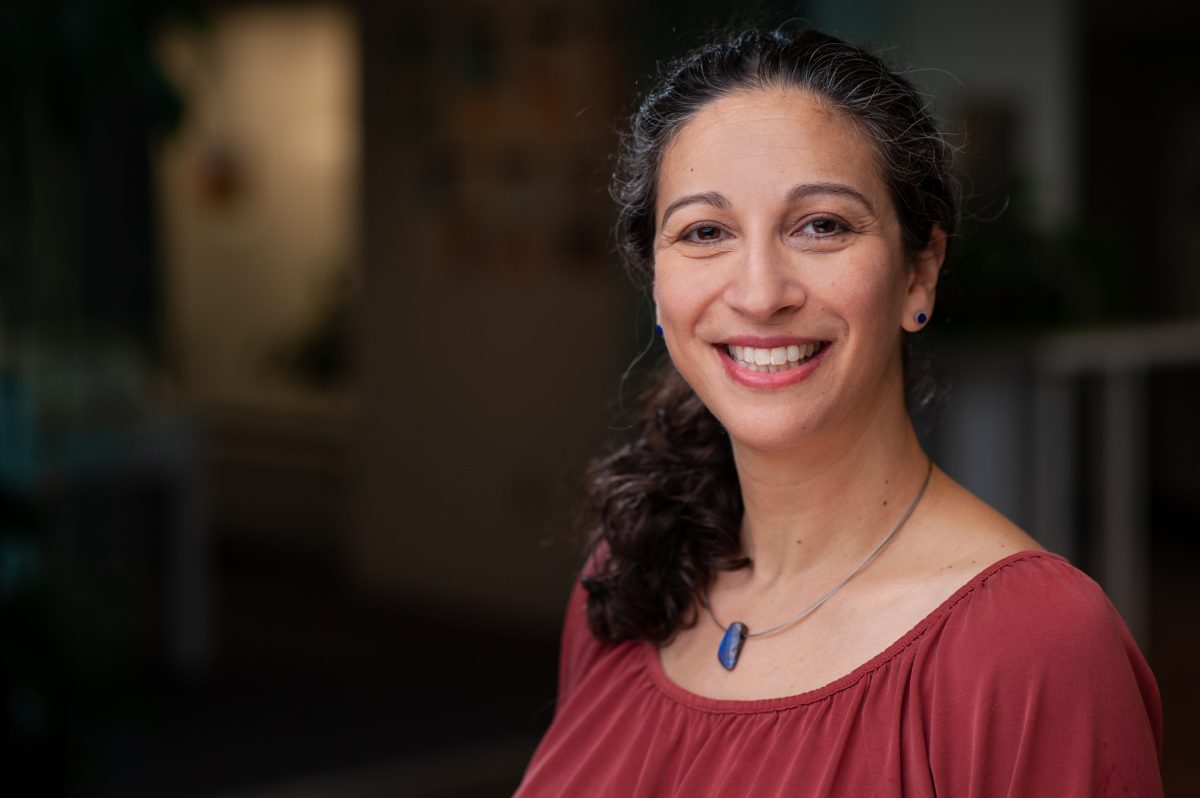
Sarah Willen
Director of Graduate Studies, Anthropology
Co-Director, Research Program on Global Health and Human Rights
Professor, Anthropology