Lorem ipsum dolor sit amet, consectetur adipiscing elit, sed do eiusmod tempor incididunt ut labore et dolore magna aliqua. Ut enim ad minim veniam, quis nostrud exercitation ullamco laboris nisi ut aliquip ex ea commodo consequat. Duis aute irure dolor in reprehenderit in voluptate velit esse cillum dolore eu fugiat nulla pariatur. Excepteur sint occaecat cupidatat non proident, sunt in culpa qui officia deserunt mollit anim id est laborum.
Curators

Emma Dashnaw
Emma Dashnaw (she/they) is a driven M.A. student in Human Rights at the University of Connecticut, holding a B.A. in History with a minor in Pre-Law from Eastern Connecticut State University. Emma’s interests and expertise lie in archival research, digital history, and the acknowledgment and remembrance of genocide. They have interned at the Vernon Historical Society, contributed to the Digital Windham project, and created a documentary capturing the early days of the Bosnian War under the direction of Catherine Masud. Currently, Emma, alongside a team, is curating Andras Riedlmayer’s collection on the UConn ICTY Digital Archives page. Emma is also pursuing a project titled “The Tapestry Within: Unraveling Family Stories, Weaving Personal History,” which reflects on her life and family history. Her work in human rights and history has reinforced her passion for archival work, for which she plans to pursue a Ph.D. in History with a focus on Holocaust and Genocide Studies.
Emma’s previous projects:
Willimantic in 1910: Cultural Elements
A National Human Rights Institution in the United States: Complementing State and Local Human Rights Commissions
Emma’s Reflection
From Homeschool to Digital History: My Journey
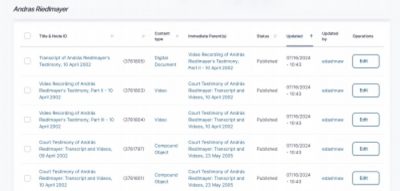
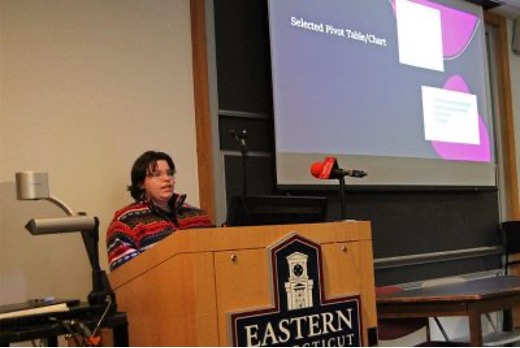
For the past three years, I have devoted my academic and professional journey to digitizing and preserving history. As a Master of Arts student in Human Rights with a Bachelor of Arts in History, I have witnessed firsthand the critical role that digital history and archiving play in making history accessible, preserving fragile artifacts, and ensuring we remember and learn from past atrocities, such as genocides. Achieving this in such a short time has been a dream come true. As a former homeschooler, my educational interests were diverse, but history always stood out. My mother encouraged my sister and me to explore beyond our textbooks, borrowing books from the local library and watching documentaries on various historical topics. Growing up in Central Massachusetts, frequent visits to Old Sturbridge Village ignited my passion for history. As I approached college, I knew I wanted to major in history, but I also pursued psychology. Despite excelling academically, my passion for psychology waned, while my interest in history deepened. I struggled with how I could help people with a history degree. During spring semester of my sophomore year, I interned at the Vernon Historical Society, where I learned valuable skills such as collation, data entry, archival research, phone etiquette, file archiving, archival preservation, nonprofit organization operations, and time management. This experience provided me with purpose and direction. When I transferred to Eastern Connecticut State University from Nichols College, I was determined to contribute to something larger than myself. In my last semester at Eastern Connecticut State University, I worked on the Digital Windham project under Dr. Jamel Ostwald’s direction. This project involved studying the social and cultural groups of Willimantic in 1910 and digitizing historical records to provide a comprehensive view of the town’s past. I curated an Omeka exhibit and presented my work to the university, showcasing how digital tools can bring community history to life. Currently, I am expanding my digital history and archiving skills further in my MA program. In Catherine Masud’s Human Rights Archives class, I crafted a script for a short documentary on the Bosnian Genocide, focusing on Ron Haviv, a prominent photojournalist who shared his oral history with the class and the early days of the war in Bijeljina. I am also collaborating on the ICTY Digital Archives at the University of Connecticut curating The András Riedlmayer Collection. This practicum has been transformative, allowing me to develop new skills, including using the Connecticut Digital Archive (CTDA) website, managing spreadsheet ingests, and enhancing my research capabilities. Additionally, I have gained web design experience, broadening my understanding of how digital tools can enhance archival work. This practicum has reignited my passion for archiving and digital history, inspiring me to pursue this as my dream career.
Lessons Learned
Accessibility and Preservation
Digitizing history makes it accessible to a global audience and preserves fragile artifacts. Digital archives allow researchers, students, and the public to access materials that would otherwise be confined to physical locations, promoting a more inclusive understanding of history and enabling diverse narratives to be explored and understood.
Challenges and Digital History
While digitization offers many benefits, it is essential not to rely solely on technology. Digital collections must be complemented by proper archival procedures to ensure the physical preservation of historical items. Archivists must adhere to best practices in storing and caring for physical artifacts alongside their digital counterparts to safeguard history for future generations.

Remembrance and Learning
Archival work serves as both a form of remembrance and a tool for learning. Creating collections helps us remember significant events and individuals, fostering a connection to our shared past. This is especially important for remembering genocides, as it ensures that the horrors of these atrocities are not forgotten. Digital archives play a crucial role in combating misinformation and preserving the truth.
Final Reflections
Digital history and archiving are vital for making history accessible, preserving the past, and ensuring we remember and learn from events such as genocides. My journey in this field has shown me the immense value of these practices and the challenges we must navigate to protect our historical heritage. Balancing digital tools with proper archival care allows us to safeguard history for future generations.
Looking ahead, I hope to pursue a Ph.D. in History with a focus on Holocaust and Genocide Studies. This advanced study will deepen my understanding of these critical issues and enable me to continue contributing to the preservation and remembrance of our shared past. By combining rigorous academic research with practical archival work, I aim to help ensure that the lessons of history are never forgotten and that we remain vigilant against the recurrence of such atrocities.
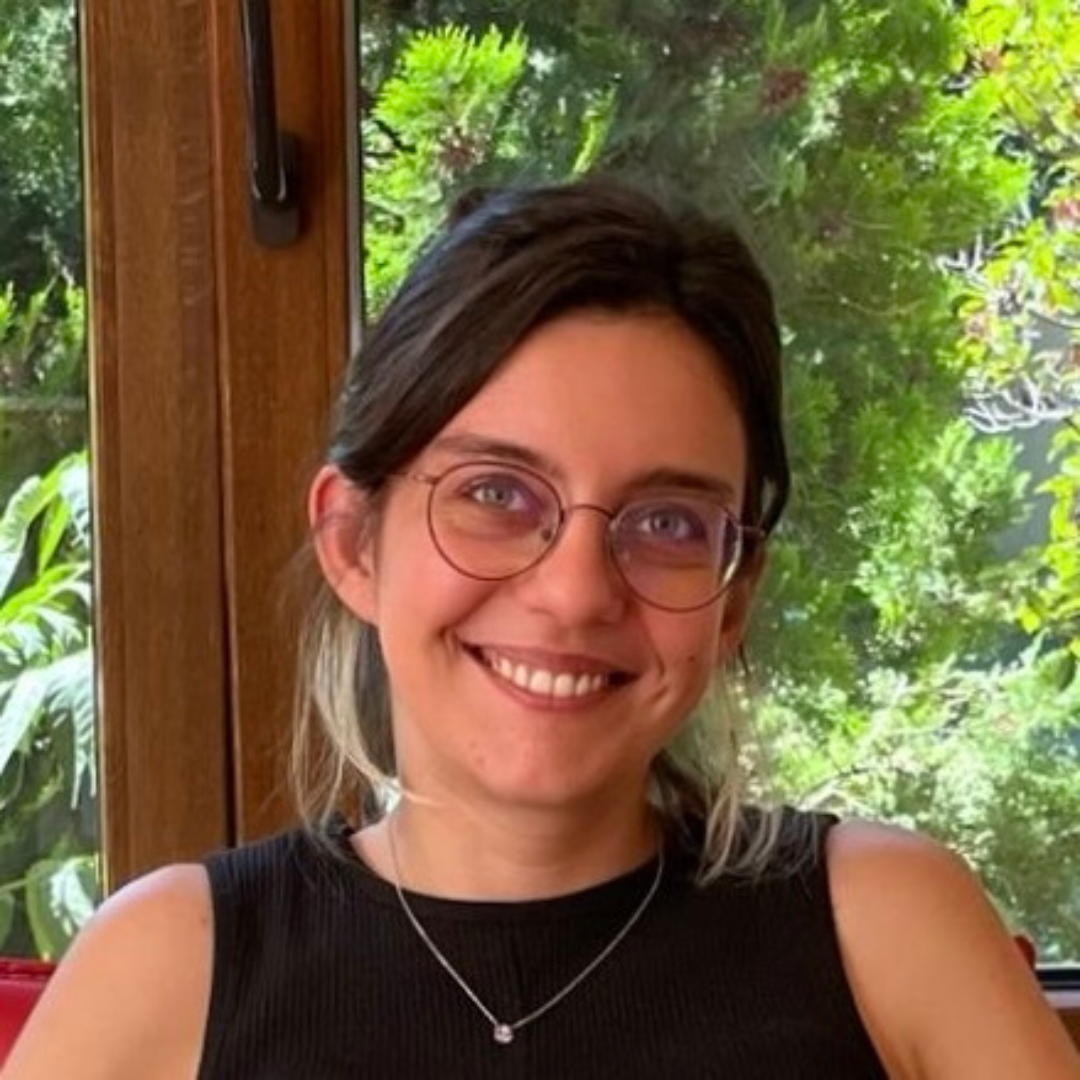
Rodja Idil Arslan
Rojda is a Ph.D. student in Comparative Literary and Cultural Studies, also pursuing a graduate certificate in Human Rights. Her research focuses on Kurdish novels and the emergence of alternative perspectives on human rights in those works. She is particularly interested in how literary works function as sites of resistance and refusal, as well as how they work to renew and redefine existing definitions of rights and justice. In her curatorial work with the ICTY Digital Archives, Rojda supports the collective effort to ensure complex legal and historical records remain both accessible and permanent. This work involves applying her background in human rights to help preserve at-risk histories at the intersection of narrative and justice.
Rodja’s Reflection
On the Manual and Ethical Labor of Digital Archiving
I am a student of stories. My doctoral research concerns refusal in Kurdish human rights novels — more precisely, the ways that literatures of refugees, genocide, and captivity resist being defined, categorized, or consumed, and push back against easy interpretation. That resistance is, in many respects, the theoretical center of what I study. But lately, my engagement with human rights has not taken place in a library or a classroom. It has taken place in a spreadsheet.
This is not what I had anticipated, but it has proven worth thinking through carefully.
I read recently Michael Ondaatje’s Anil’s Ghost. In it, Anil, a forensic anthropologist, works to identify a skeleton — to name it, to restore it to a history. The novel is, among other things, about how fragments get read and misread, and about how the desire for resolution can shape what the evidence is permitted to say. I found myself returning to it while working on the ICTY Digital Archives, not because the comparison is exact, but because the practical difficulty is similar. You are handling partial records, and you are trying to make them legible to someone who was not present, and who may arrive without context.
My work in the archives included file naming, metadata entry, spreadsheet ingests, and re-publishing records on the Connecticut Digital Archive (CTDA) website. For example, for the Bill Tomljanovich Collection, I worked through parts of the Republic of Croatia Presidential Transcripts from 1992 to 1995, checked dates, exhibit numbers, page orders, title consistency, and so on. For the Kunarac et al. (Foča Case), part of the ICTY Sexual Violence Legacy Archives Collection, my work required reading of trial documents, including transcripts and exhibits related to charges of rape and sexual enslavement. The Kunarac case, together with Čelebići and Furundžija, marks a significant moment in the development of international criminal law. It was the first time an international tribunal handed down convictions based solely on crimes of sexual violence, and it extended the legal definition of enslavement to encompass sexual enslavement as a crime against humanity.
Describing these records presents a methodological problem I had not fully anticipated. How do we produce accurate, usable metadata without sanitizing content that ought not to be sanitized? What happens when the demand for neutral, professional description flattens the character of what a document actually contains? And how do we avoid the opposite failure, that is, description that foregrounds detail in ways that may sensationalize rather than document? This is, of course, not a problem unique to archival work. It runs through human rights documentation more broadly.
Sexual violence in conflict, and particularly sexual violence as a systematic instrument of genocide, has a complicated relationship with public representation. On one hand, visibility has carried real legal and political weight. The documentation of systematic rape in Bosnia, or more recently the sexual enslavement of Yazidi women by ISIS (see, for example, this article on how media sensationalizes sexual violence), brought these issues onto international legal and policy agendas in ways that produced concrete consequences.
On the other hand, that same visibility has frequently tipped into sensationalization. Coverage that centers the details of violence over the structural conditions that make it possible, that positions survivors primarily as victims for external audiences, and that can, paradoxically, reproduce the very dehumanization it claims to oppose. The archive, if it is not carefully managed, risks participating in the same dynamic.
Saidiya Hartman, writing in a different context, describes colonial archives that hold almost nothing about the subjectivity and personhood of the enslaved, where the people they concern appear only as property. The Foča materials pose a problem that is at once similar and different. There is no shortage of records about the people concerned. The ICTY documentation is extensive. But abundance does not mean that the people appearing in these records are fully present within them. What survives is a legal record, shaped by the requirements of evidence, and that language carries distortions of its own.
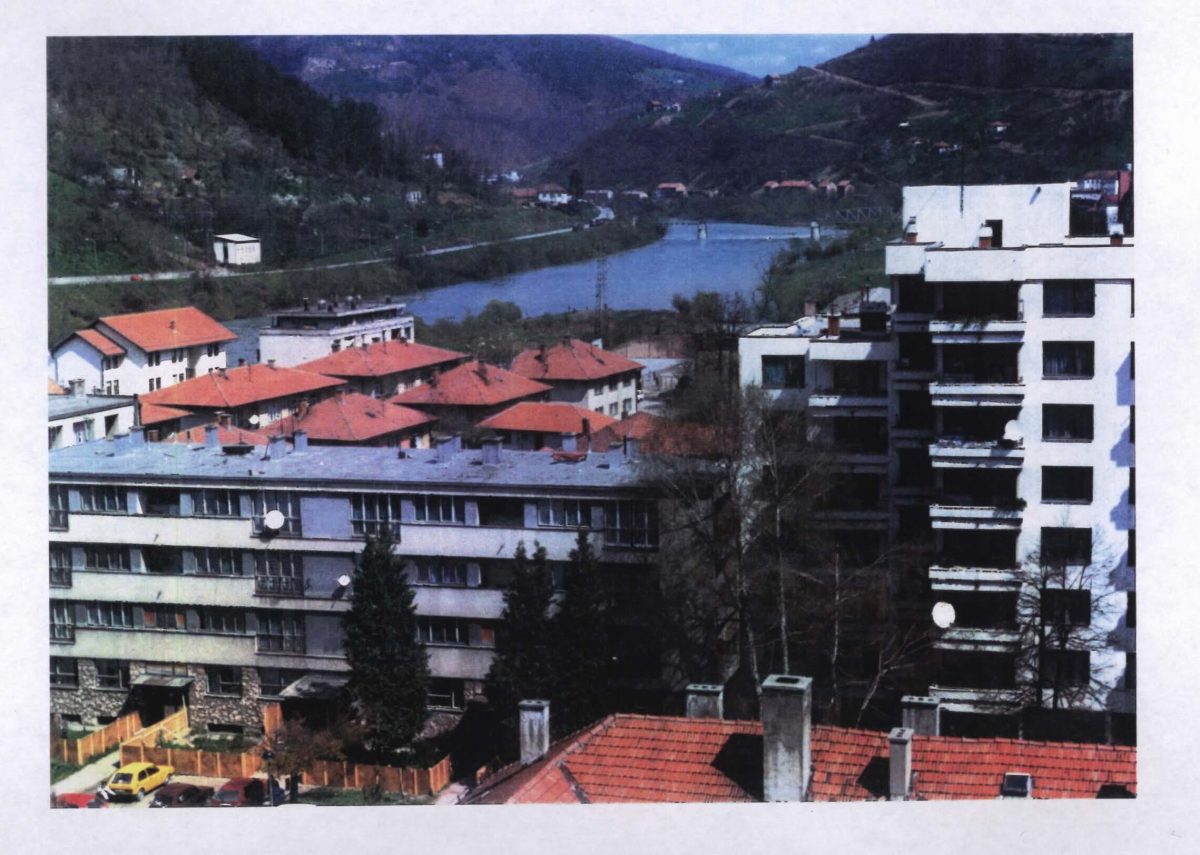
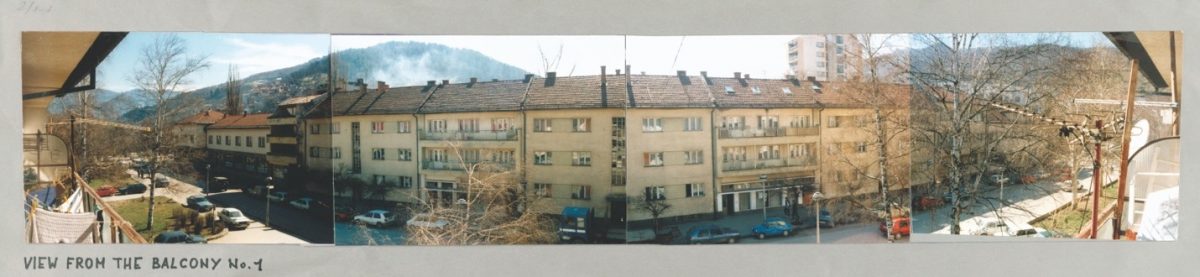
In my opinion, the visual exhibits cut through that linguistic abstraction in an unexpected way. Most of them are maps, photographs of buildings, aerial views, geography, infrastructure, the physical coordinates of what occurred. And there is something strange about encountering a photograph of a building when you know, from the surrounding documents, what took place inside it. The image does not show the violence. It only confirms that the place is real, that it exists, that this happened somewhere specific. That is its own kind of weight, and it settles differently than text.
In the end, whether the archival materials are visual, textual, or multimedia, my experience with the ICTY Sexual Violence Legacy Archives Collection taught me that justice, history, and the archive are not finished things. Rather, they are ongoing processes that require careful manual work, ethical responsibility, and collaboration at the same time.
Molly McNulty
Molly McNulty is a graduate student studying human rights with a focus in atrocity prevention. Her work focuses on downstream genocide prevention, what can be done in a post atrocity society to prevent reoccurance. She has previous experience working in archives from her undergraduate institution, as well as experience in non-profits, and k-8 public education. Molly’s work with the digital archive has focused on the ICTY exhibit, specifically the sexual violence collection, which has deepened her understanding and passion for her genocide prevention work.
Molly’s Reflection
Preserving Justice: Working with the ICTY Sexual Violence Archives
As a human rights student, I understand the importance of preserving and protecting history. So when I heard that there was a large collection of digital documents that needed to be curated and added to the University of Connecticut Digital Archive, I was excited to be part of this important work. My work as a human rights student has focused specifically on mass atrocity crimes—genocide, war crimes, and crimes against humanity—and their prevention. For this reason, working on the digital archive for the International Criminal Tribunal for the Former Yugoslavia (ICTY) seemed like a perfect fit.
At the end of my first year working for the archives, I was honored to be part of the team that worked on The ICTY Sexual Violence Legacy Cases Collection. I specifically worked on the collection related to the trial of Anto Furundžija, a commander of a unit of the Croatian Defence Council who was accused and tried for the crimes of torture and outrages upon personal dignity, including rape, before the tribunal. This work was especially striking to me as someone who has studied the ICTY in textbooks and classes as a landmark tribunal in the prosecution of war crimes, crimes against humanity, and genocide.
This trial was one of the first international cases to clearly establish rape as a form of torture under international law, setting an important precedent that continues to shape how sexual violence is defined and prosecuted in international criminal tribunals. For these reasons, being able to work with the real documents from this case—records produced by prosecutors at The Hague—was an incredible privilege. It strengthened my commitment to genocide prevention as well as my understanding of this important landmark case.
There were several exhibits that stood out to me as especially valuable and affecting, most of which were testimonies from victims or eyewitnesses that implicated Furundžija and his men in the aforementioned crimes. One such exhibit was titled “Statement given by the witness on 21-12-93 to the Investigating Judge of the High Court in Zenica in the case against Dario Kordić.” In this exhibit, a woman gives an account of witnessing Croatian soldiers enter and exit her apartment block, kidnapping and killing her neighbors.
What strikes me about this document is that it is so similar to many other testimonies I have read. Testimonies like this serve two purposes within the realm of atrocity prevention. In one way, they represent patterns that we see across many genocides and mass atrocity crimes. With records like these, we are better able to identify genocide either before it happens or when it is still in its early stages, which allows us to save as many lives as possible.
The second—and possibly more important—reason these documents are so significant is that they serve as reminders of those lost in situations of mass atrocity. The number of victims becomes more meaningful as we see the real stories behind the toll. The witness tells the story of her Muslim neighbor, Arifa Tanović, who was brutally tortured and murdered by Croatian soldiers who invaded their building. The witness then goes on to describe her own harrowing experience when she was imprisoned by Furundžija and his men.
“Television and radio kept telling us that any Croats who hid Muslims would be eliminated. They said to me: “It’s war, it’s every man for himself.”
– Anonymous witness on 21 December, 1993 in the case against Darijo Kordić –
This witness’s story is just one of thousands of experiences endured by men and women during the aggression against Bosnia and Herzegovina. Documents like this transform the conflict into stories of people, humanizing events that can otherwise feel too broad and vast to understand on a human level.
Though reading through these documents during the curation of the exhibit is a difficult task, it is also an important one. This work makes me feel closer to the victims of the atrocities committed during the aggression against Bosnia and Herzegovina, as well as to the broader histories of genocide that I have studied in my academic work.
This exhibit, as well as the ICTY archive as a whole, is full of testimonies like this one that are so important to preserve. It has been an honor to help preserve these testimonies and to remember the stories of people like this witness and her neighbor Arifa.

Gamze Özker
Gamze is a graduate student in Human Rights, focusing on political violence and the evolving dynamics of modern conflict. Her research interests include the decision-making processes of non-state armed groups, their perceived legitimacy, and how civilians influence the conduct and outcomes of conflicts. Through her work with the ICTY Digital Archive, she aims to highlight how historical and contemporary narratives reveal the complexities of warfare, from governance to accountability, while emphasizing the human suffering it generates.
Gamze’s Reflection
A Reflection on Curating Memories in the Digital Age
From a very young age, I have been drawn to understanding the human cost of conflict —not through formal education, but simply because it resonated with me on a personal level. One of my earliest encounters with the realities of mass violence is particularly vivid: as a child, I hid behind the couch, secretly watching Schindler’s List. Around the same time, the Bosnian War —marked by brutal massacres, forced displacement, and other cruel acts—was also unfolding. Even though I could not fully grasp the complexities of what I was seeing on TV, they prompted me to question how such horrors could occur, and how the rest of the world could allow them to happen. After learning to read, I became captivated by books on these subjects, including The Hidden Children: The Secret Survivors of the Holocaust by Jane Marks and Zlata’s Diary: A Child’s Life in Sarajevo by Zlata Filipović. Although I had never experienced conflict firsthand, I would often look at buildings and wonder if they could serve as good hiding spots, revealing how these narratives shaped my thinking.
As I grew older, these early exposures fostered a strong sense of connection and deepened my interest in learning more about the lived experiences behind these events, which eventually led me to volunteer at the United States Holocaust Memorial Museum in Washington, D.C., and the Holocaust Museum in Los Angeles. While working in visitor services, I had the opportunity to interact closely with Holocaust survivors, listening to their stories and assisting visitors as they navigated the exhibits. Ultimately, these experiences became an integral part of who I am and significantly shaped my academic interests. During this period, I also began to appreciate the importance of safeguarding both narratives and artifacts, recognizing how they complement each other.
As time passes, the memories of these events grow more distant, and the number of individuals who can recount their experiences firsthand gradually declines. Consequently, our ability to connect with the past increasingly depends on preserved records and testimonies. In this context, digital archives become invaluable; they go beyond simply exhibiting abstract concepts and become a powerful tool for storytelling. For descendants, these records offer a sense of belonging and continuity, providing a direct link to their heritage and family history. Each curated document, photograph, and video represents a fragment of reality, capturing a moment that is part of a much larger narrative. By safeguarding these moments, digital archives ensure that future generations can engage with critical events, regardless of geographic location. In addition to revealing the profound impact of the conflict, they honor the experiences of survivors and commemorate those who perished.
Curating The András Riedlmayer Collection as an intern for the ICTY Sexual Violence Legacy Cases Collection allowed me to explore a different aspect of atrocities that is often understudied. Riedlmayer’s work exposed that the destruction of cultural and religious sites was not collateral damage during the Yugoslav Wars, but a deliberate effort to detach future generations from their identity and annihilate the group’s cultural memory, even when its members survived. As a result, Riedlmayer’s research and expert testimony became pivotal in promoting accountability for these acts during the ICTY trials and underscoring the necessity of protecting cultural heritage as a fundamental obligation under international humanitarian law.
While the evidence presented by the prosecution holds great significance, I was specifically interested in incorporating relevant defense counsel records into the collection, as they are essential for understanding the complex ethnic tensions in the region and providing a fuller view of the judicial process. These narratives often attempted to rationalize the motives behind the genocidal acts, portraying them as necessary measures to protect ethnic identity or to reclaim historically Serbian territory, that is central to the Greater Serbian narrative. This rationale extended to invalidating or denying the historical and cultural presence of other ethnic communities in certain contexts, while in other instances, depicting that presence as excessive or threatening.
Finally, the ICTY records not only documents the atrocities of the Yugoslav Wars and the suffering endured; it also highlights the strength and resilience of survivors and witnesses, along with the dedication of those who worked tirelessly to ensure justice and promote reconciliation. Their perseverance is a compelling reminder of the power each of us holds to stand up against injustice. This was one of the most important takeaways from my practicum. Though the past cannot be undone, each effort to acknowledge and learn from past atrocities, foster empathy, and amplify the voices of affected communities creates meaningful pathways toward justice and a more compassionate future.
Dedication
I extend my deepest gratitude to The Gladstein Family Human Rights Institute (HRI) for making this practicum possible. My sincere thanks to the faculty and staff for their invaluable guidance, which continues to inspire me.
This post is dedicated to those who have endured the systematic erasure of their identities and the immense challenge of preserving their sense of self in the face of such violence.

Jonathan Kopeliovich
Jonathan Kopeliovich is a multimedia producer and communications professional based in Los Angeles, holding a BFA in Digital Media and Design from the University of Connecticut. His professional focus lies in multimedia storytelling and the preservation of at-risk historical narratives, utilizing his background in journalism and broadcast operations to bridge the gap between complex archives and public accessibility. For the ICTY Digital Archives, Jonathan oversaw a critical data recovery initiative, leveraging automated workflows to secure thousands of endangered court records for future public acces. Jonathan provided volunteer research, technical, and curatorial support during the initial development of the ICTY Sexual Violence Trial Records Collection. He views this work as a necessary foundation for journalists, filmmakers, and educators to tell accurate, evidence-based stories about human rights.