Conference Information
Keynote Speakers
Thursday, October 22
4:00pm Raymond & Beverly Sackler Distinguished Lecture Series | UConn Law School
- Dorothy Q. Thomas, Research Associate at the Centre for International Relations and Diplomacy, School for Oriental and African Studies (SOAS), University of London | “Are Americans Human?: An Ex-Patriots Guide to the Future of Progressive Politics in the US”
Friday, October 24
9:00am James L. and Shirley A. Draper Chair of Early American History Lecture | UConn, Storrs Campus
- Linda K. Kerber, May Brodbeck Professor in Liberal Arts & Sciences, University of Iowa,Department of History | “Universal Human Rights and the Asymmetries of Citizenship”
Thursday, October 22
UConn Law School, Hartford
4:00pm Sackler Distinguished Lecture in Human Rights | William R. Davis Courtroom, Starr Hall
- Introductions by University of Connecticut President, Mike Hogan
- Dorothy Q. Thomas, Visiting Fellow, London School of Economics’ Centre for the Study of Human Rights | “Are Americans Human?: An Ex-Patriot’s Guide to the Future of Progressive Politics in the U.S.”
Friday, October 23
UConn Law School, Hartford
8:00-9:00am Registration & Breakfast | William F. Starr Hall, Reading Room
9:00-10:30am Session One (Panels Run Concurrently)
- Criminal Punishment in the United States
- Chair: Susie Schmeiser,University of Connecticut School of Law
- Ben Fleury-Steiner, University of Delaware | “Confronting HIV/AIDS in U.S. Carceral Institutions: Lessons from the Southern Center for Human Rights’ Leatherwood Litigation.”
- Mie Lewis, ACLU Women’s Rights Project | “The Future of Human Rights for Child Prisoners in the United States.”
- Linda Meyer, Quinnipiac University | “The Ignominious or More Painful Parts”: The Cruelty of Punishment in America.”
- Nkechi Taifa, Open Society Institute | “Manifestations of Genocide: The Impact of Racism in the U.S. Criminal Justice System.”
- Environmental Justice, Future Generations and Human Rights
- Chair: Rich Hiskes, University of Connecticut
- Joanne Bauer, Business and Human Rights Resource Center | “Human Rights: The Critical Link between Environmental Justice and Corporate Responsibility.”
- Rebecca Bratspies, CUNY School of Law | “What are Environmental Rights?”
- Elizabeth Burleson, University of San Diego School of Law | “Climate Change Displacement to Refuge”
- James Nickel,University of Miami |“Linkage Arguments from Human Rights to Environmental Protections.”
10:30-10:45am Break | William F. Starr Hall, Reading Room
10:45am-12:15pm Session 2 (Panels Run Concurrently)
- Economic Rights and Poverty
- Chair: Shareen Hertel, University of Connecticut
- Discussant: Ken Neubeck, University of Connecticut Emeritus
- Discussant: Susan Randolph, University of Connecticut
- Catherine Albisa, National Economic and Social Rights Initiative | “Drawing Lines in the Sand: The Development of New Rights Norms in the United States”
- Philip Harvey, Rutgers University School of Law, Camden | “A Rights-Based Anti-Recession Strategy: What American Progressives Learned from the New Deal and then Forgot.”
- Rhoda Howard-Hassmann, Wilfred Laurier University | “The Yellow Sweatshirt: Human Dignity and Economic Human Rights in Advanced Industrial Democracies.”
- Gillian MacNaughton, University of Oxford | “A Holistic Human Rights Perspective on Poverty.”
- Disability and Human Rights
- Chair: Kaaryn Gustafson, University of Connecticut School of Law
- Jill Anderson, University of Connecticut | “Rights in Pieces: The Language of Disability Discrimination.”
- Rangita de Silva de Alwis, Wellesley College | “Transforming the Intersections of the CEDAW and CRPD in Bangladesh, Cambodia, and Nepal: Some Lessons for the United States.”
- Janet Lord, American University | “The Law and Politics of US Participation in the UN Convention on the Rights of Persons with Disabilities”
- Kathy Martinez, Assistant Secretary for U.S. Department of Labor’s Office of Disability Employment Policy (ODEP)
- The Degree to which the U.S. is Answerable to International Institutions Regarding Human Rights
- Chair: Richard S. Kay, University of Connecticut School of Law
- William Dunlap, Quinnipiac University School of Law | “American Exceptionalism and International Criminal Tribunals”
- Ellen Messer, Brandeis University | “The Human Right to Food. Is or should the U.S. be answerable to international institutions?”
- Simon Payaslian, Boston University | “The U.S. War in Iraq, War Refugees, and International Obligations”
- Andreas Teuber, Brandeis University | “The Hunting of the Snark: Finding Human Rights in International Law and the U. S. Constitution.”
12:30-2:00pm Lunch | William F. Starr Hall, Reading Room
2:00-3:30pm Session Three (Panels Run Concurrently)
- Health Care Coverage in the USA through a Human Rights Lens
- Chair: Audrey Chapman, University of Connecticut Health Center
- Alicia Ely Yamin, Harvard University Law School | “Health care reform in the US: The Relevance of International Human Rights.”
- Anja Rudiger, National Economic and Social Rights Initiative | “Human Rights Principles for Health Care Reform.”
- Nancy Turnbull, Harvard School of Public Health | “Health Reform in Massachusetts: A Human Rights Perspective.”
- Human Rights, Institutional Cultures, and the Legacy of the War on Terror
- Chair: Janet Bauer, Trinity College
- Janet Bauer, Trinity College | “Entrapment and the War on Rights: Ethnographic Interventions.”
- Zachary Calo, Valparaiso University School of Law | “Torture, Necessity, and the Authority of Human Rights.”
- Christopher Einolf, DePaul University School of Public Service | “Human Rights Law, Informal Norms, and Torture in the History of the United States Army.”
- Winifred Tate, Colby College | “The U.S. Southern Command, Human Rights, and Military Memory: Lessons from US Engagementin Latin America.”
- Mobilizing and Legislating for a Human Rights Based Approach to Welfare
- Chair: Kathy Libal, University of Connecticut
- Discussant: Nancy Naples, University of Connecticut
- Mimi Abramowitz, Hunter College School of Social Work and the Graduate Center, CUNY | “The US Welfare State: A Battlefield for Human Rights.”
- Ken Neubeck, University of Connecticut Emeritus | “Human Rights Violations as Obstacles to Escaping Poverty: The Case of Lone Mother-HeadedFamilies.”
- Eric Tars, National Law Center on Homelessness and Poverty | “A Proper Home for Housing Advocacy: A Human Rights Approach to Housing and Homelessness.”
3:30-3:45pm Break
3:45-5:15pm Session 4 (Panels Run Concurrently)
- Children’s Human Rights in the United States
- Chair: Kathy Libal, University of Connecticut
- Discussant: Lynne Healy, University of Connecticut
- Kathy Libal, University of Connecticut | “America’s Shame: The Politics of Recognizing Children’s Economic Human Rights in the UnitedStates.”
- Rosemary Link, Simpson College | “Are Children’s Rights a Family Affair: Parental and Cultural Implications of the Convention on theRights of the Child?”
- Susan Mapp, Elizabethtown College |“Violations of Children’s Rights in the United States.”
- Jonathan Todres, Georgia State University College of Law | “The U.S. Role in Advancing the Rights and Well-being of Children at Home and Abroad.”
- Immigration Rights and Political Agency
- Chair: Mark Overmyer-Velazquez, University of Connecticut
- Andrea Dyrness, Trinity College
- Kica Matos | US Reconciliation and Human Rights Program – Atlantic Philanthropies
- Enrique Sepulveda, St. Joseph’s College
7:30pm Theatrical Production | Barca Hartford
- Amalia’s Story: a vignette of The Parkville Project
Saturday, October 24
9:30-11:00am Keynote Lecture | University of Connecticut, Storrs Campus Rome Ballroom
Sponsored by the James and Shirley Draper Chair in Early American History
- Opening Remarks by CLAS Dean Jeremy Teitelbaum
- Introductions by Bob Gross, James and Shirley Draper Chair in Early American History
- Professor Linda Kerber, University of Iowa | “Universal Human Rights and the Asymmetries of Citizenship”
11:00-11:15am Break
11:15-12:30pm Session 5
- The Shield of Citizenship: Historical Anomalies for Human Rights
- Chair: Richard Brown, University of Connecticut
- Discussant: Linda Kerber, University of Iowa
- Bethany Berger, University of Connecticut Law School | “Realizing Human Rights: Native American Dilemmas.”
- Elizabeth Hillman, University of California-Hastings College of Law | “Human Rights and Military Justice: from the Civil War to the ‘War on Terror’.”
- Katrina through an Economic Rights Lens
- Chair: Evelyn Simien, University of Connecticut
- Discussants: Sakiko Fukuda-Parr, The New School and Heather Turcotte, University of Connecticut
- Davida Finger, Loyola University New Orleans College of Law
- Rachel Luft, University of New Orleans | “Post Hurricane Katrina Evacuation and Housing Policy: A Human Rights and Social Movements’Analysis.”
- Hope Lewis, Northeastern University School of Law | “‘Darkness Made Visible’: An American Disaster in Transnational Perspective”
- Kristen Lewis, Social Science Research Council, American Human Development Project | “A Portrait of Louisiana: Louisiana Human Development Report 2009.”
- Implementing Human Rights at the Local Level
- Chair: Ken Neubeck, University of Connecticut Emeritus
- Judith Blau, University of North Carolina, Chapel Hill | “International Human Rights Arrive in Carrboro, North Carolina – Processes, Coalitions, Projects.”
- Ejim Dike, Human Rights Project Urban Justice Center | “Advancing Substantive Equality through City Governance: Lessons from the Human RightsFramework.”
- Risa Kaufman, Columbia University Law School |“State and Local Commissions as Sites for Domestic Human Rights Implementation.”
- Chivy Sok, Ginetta Sagan Fund of Amnesty International USA | “A Challenge to All: Meaningful Implementation of Human Rights.”
12:30-2:00pm – Lunch
2:00-3:30pm Session 6 (Panels Run Concurrently)
- Economic Justice
- Chair: Davita Glasberg, University of Connecticut
- Angie Beeman, University of Connecticut
- Colleen Casey, University of Texas at Arlington | “Keeping Hearth and Home: Economic Justice and Resistance to Predatory Lending and HousingForeclosure.”
- Jon Green, Working Families Party
- Bandana Purkayastha, University of Connecticut | “Never a Right in Sight”: Economic Justice from the Perspective of Immigrant Female Workers inthe Informal Economy.”
- Is Domestic Violence in the USA a Human Rights Violation?
- Chair: Serena Parekh, University of Connecticut
- Caroline Bettinger- Lopez, Columbia University Law School, Human Rights Clinic | “Domestic Violence as a Human Rights Violation: New Directions for Advocates and Scholars.”
- Sally Merry, New York University | “The Curious Resistance to Seeing Domestic Violence as a Human Rights Violation in the USA.”
- Evan Stark, University of Medicine & Dentistry of New Jersey | “Framing Coercive Control as a Human Rights Crime.”
- Neither Separate Nor Equal: Human Rights and the Rights of Lesbian, Gay, Bisexual andTransgendered Individuals in the United States
- Chair: Valerie Love, University of Connecticut
- Lee Badgett, Center for Public Policy and Administration, University of Massachusetts, Amherst | “Gay economic interests vs. the Gay Marriage Movement? Reconciling the Tensions between TwoHuman Rights Movements”
- Leslie Gabel-Brett, Lambda Legal National Headquarters | “Marriage Equality for Same-Sex Couples: A Fundamental Human Right.”
- Julie Mertus, American University | “LGBT Rights are Human Rights: Gatekeepers, Draw Bridges and the Rainbow Parade.”
3:30-3:34pm Break
3:45-5:15pm Session 7 (Panels Run Concurrently)
- Rights Activism around CEDAW in the USA
- Chair: Manisha Desai, University of Connecticut
- Ashley Balbian, SUNY-Potsdam
- Susanne Zwingel, SUNY-Potsdam | “American Exceptionalism” and International Women’s Rights – An Unhappy Marriage?”
- Sheila Dauer, Columbia University Teachers College | “Human Rights’ Best Allies: Survivors of Violence and Discrimination, Service Providers and NGOs.”
- Debra Liebowitz, Drew University | “The Practice of Feminist Human Rights: Theorizing the Substance and Politics of Local HumanRights Ordinances in the United States.”
- Researching Economic Rights in the USA
- Chair: David Richards, University of Memphis
- Discussants: David Richards, University of Memphis and Lyle Scruggs, University of Connecticut
- David Cingranelli, SUNY-Binghamton | “Measuring and Explaining the Gap between ILO Standards and US Labor Policies.”
- Patrick Heidkamp, Southern Connecticut State University | “Measuring Economic Rights in the USA: A Spatial Analytic Perspective.”
- Lanse Minkler, University of Connecticut | “On the Cost of Economic Rights in the US.”
- Susan Randolph, University of Connecticut | “Economic Rights in the Land of Plenty: Monitoring State Fulfillment of Economic & Social RightsObligations in the United States.”
Economic Rights and Poverty – Panel Chairs: Shareen Hertel, UConn- Political Science
This session will consider US poverty as a violation of the right to an adequate standard of living (enshrined in Article 25 of the UDHR). Panelists will contrast this new approach with those usuallyfound in the development literature that focus on economic growth.
This session will consider US poverty as a violation of the right to an adequate standard of living (enshrined in Article 25 of the UDHR). Panelists will contrast this new approach with those usuallyfound in the development literature that focus on economic growth.
Katrina Through an Economic Rights Lens – Panel Chairs: Evelyn Simien, UConn- Political Science
The devastation wrought by the Katrina Hurricane on New Orleans and the Gulf Coast Region can be thought of a violation of a series of different economic rights. While the hurricane affected all socio-economic groups, those most seriously affected were poor minorities. Patterns of discrimination in housing, hurricane protection, and evacuation plans left them most vulnerable, while in the aftermath their plight was exacerbated by the government’s unwillingness to treat them as Internally Displaced Persons as described in international agreements.
Researching Economic Rights in the USA – Panel Chairs: David L. Richards, University of Memphis
This panel will give scholars a chance to present their cutting edge research on a variety of topics in Economic Rights in the USA with a focus on empirical research/methods.
Mobilizing and Legislating for a Human Rights Based Approach to Welfare – Panel Chair: Kathy Libal, UConn School of Social Work
Panelists will explore the possibilities and limits of framing access to social welfare provision for vulnerable individuals (women, children, disabled, etc.) as human rights concerns and will engage both legal and social activist approaches to realizing economic and social rights in the United States.
Economic Justice – Panel Chair – Davita Silfen Glasberg, UConn- Sociology
This session will focus on resistance to and attempts at change in the denial of equal economic rights in the US.
Natural Rights, Bills of Rights and Human Rights – Panel Chair: Richard Brown, UConn- History
This panel would consider the several states in the USA, as well as the Bill of Rights added to the Constitution of 1787. The central theme would be the long process of universalizing rights that were once viewed as limited in application to property holders, then white male citizens, then male citizens, then citizens, then all humankind.
Is Domestic Violence in the USA a Human Rights Violation? – Panel Chair: Serena Parekh, UConn- Philosophy
The topic of women’s rights receives a lot of attention, but that attention is usually focused on the kinds of atrocities that are unfamiliar to most people in the United States – FGM, honor killings, widow burnings, etc. Yet many women in the United States experience violence in the private sphere on a regular basis. Should we understand such domestic violence as a violation of human rights?
Environmental Justice, Future Generations, and Human Rights – Panel Chair: Rich Hiskes, UConn- Political Science
This panel will draw papers from a variety of potential topics that bring human rights concerns into issues that have for the most part been argued on other grounds. Issues of fossil fuel consumption, environmental protection, global warming, justice across generations, etc., will be explored as areas of human rights abuses and, potentially, protection.
Implementing Human Rights at the Local Level – Panel Chair: Ken Neubeck, UConn Emeritus
Panelists will explore efforts to implement international human rights principles and standards at the local municipal level of governance in the United States. The panel will address the rationale for undertaking local implementation as a strategy and discuss examples of projects in which panel members have been involved that can be emulated elsewhere.
Immigration Rights and Political Agency – Panel Chair: Mark Overmyer- Velzaquez, UConn- History
This interdisciplinary panel of scholars and activists will discuss how State proxies, corporate entities, and nativist organizations have recently harassed, detained, and deported undocumented immigrants in border settings, immigrant worksites, and first generation ethnic enclaves. Presenters will also highlight the potential for political and cultural agency secured by immigrant rights organizations, local governments, and loosely organized political fronts. They will variously ponder new sites and regimes of normative rights in national and transnational settings.
Health Care Coverage in the USA through a Human Rights Lens – Panel Chair: Audrey Chapman, UConn Health Center
Using human rights concepts, panelists will examine health care reform in the United States and cultural and political origins of the current state of the US health care system. Health care reform political activists will also engage with human rights scholars in assessing the success of the Massachusetts health care model and the implications of implementing proposals for health care reform nationally.
Children’s Human Rights in the United States – Panel Chair: Kathy Libal, UConn School of Social Work
The United States is one of two countries that have not ratified the UN Convention on the Rights of the Child. In this cross-disciplinary panel (law, social work, sociology, anthropology, and history) scholars examine the implications of the U.S. refusal to participate in the treaty. They address topics including children’s human rights violations in the juvenile justice system, the politics of monitoring under the CRC’s optional protocols, immigrant children and human rights, and the potential impact of the CRC for social work practice with children.
Neither Separate Nor Equal: Human Rights and the Rights of Lesbian, Gay, Bisexual and Transgendered Individuals in the United States – Panel Chair, Valerie Love, Curator for Human Rights and Alternative Press Collections
This panel will address lingering inequalities for Lesbian, Gay, Bisexual, and Transgender (LGBT) people in the United States, including the ramifications of unequal access to health care, insurance and financial benefits; protections against bias-motivated harassment which vary by state and do not currently exist at the federal level; the lack of legal recognition for marriages and unions between same sex couples; and ongoing legislation and initiatives to deny rights to LGBT individuals and couples.
CEDAW and the United States – Panel Chair, Manisha Desai, Director UConn Women’ Studies Program
Among the important trends in women’s human rights activism are the use of the human rights frame by the US women’s movements for domestic issues and the move away from only addressing violations of rights to the enjoyment of rights. The papers in this panel address how women’s movements in the US are using CEDAW to address gender justice even though the US has not ratified it and discuss the implications of non-ratification by the US.
Human Rights, Institutional Cultures, and the Legacy of the War on Terror –Panel Chair, Janet Bauer, Trinity College-International Studies
Post 9/11 war on terror and counterinsurgency policies arose in ad hoc fashion, raising many questions about the moral and legal violation of international human rights. These papers explore these questions by uncovering how institutional structures, social practices, and cultural assumptions have contributed to the formation and execution of military and security initiatives on the ground.
- Mimi Abramowitz, Hunter College School of Social Work and The Graduate Center, CUNY
- Catherine Albisa, National Economic and Social Rights Initiative
- Lee Badgett, Center for Public Policy and Administration, University of Massachusetts, Amherst
- Ashley Balbian, SUNY – Potsdam
- Joanne Bauer, Business and Human Rights Resource Center
- Janet Bauer, Trinity College
- Angie Beeman, University of Connecticut
- Bethany Berger, University of Connecticut, School of Law
- Caroline Bettinger-Lopez, Columbia University Law School, Human Rights Clinic
- Judith Blau, University of North Carolina, Chapel Hill
- Rebecca Bratspies, CUNY School of Law
- Zachary Calo, Valparaiso University School of Law
- Colleen Casey, University of Texas at Arlington
- Audrey Chapman, UConn Health Center
- David Cingranelli, SUNY – Binghamton
- Sheila Dauer, Columbia University Teachers College
- Rangita de Silva de Alwis, Wellesley College
- Ejim Dike, Human Rights Project Urban Justice Center
- William Dunlap, Quinnipiac University School of Law
- Andrea Dyrness, Trinity College
- Christopher Einolf, DePaul University School of Public Service
- Alicia Ely Yamin, Harvard University Law School
- Davida Finger, Loyola University New Orleans College of Law
- Ben Fleury-Steiner, University of Delaware
- Sakiko Fukuda-Parr, New School University
- Leslie J. Gabel-Brett, Lambda Legal National Headquarters
- Jon Green, Working Families Party
- Philip Harvey, Rutgers University School of Law, Camden
- Lynne Healy, University of Connecticut
- Patrick Heidkamp, Southern Connecticut State University
- Elizabeth Hillman, University of California – Hastings College of Law
- Rhoda Howard-Hassmann, Canada Research Chair in International Human Rights at Wilfred Laurier University
- Risa Kaufman, Columbia University Law School
- Linda Kerber, University of Iowa
- Mie Lewis, ACLU Women’s Rights Project
- Kristen Lewis, Social Science Research Council, American Human Development Project
- Hope Lewis, Northeastern University School of Law
- Kathryn Libal, University of Connecticut
- Debra Liebowitz, Drew University
- Rosemary Link, Simpson College
- Janet Lord, American University
- Rachel Luft, University of New Orleans
- Gillian MacNaughton, University of Oxford
- Susan Mapp, Elizabethtown College
- Kathy Martinez, Assistant Secretary for U.S. Department of Labor’s Office of Disability Employment Policy (ODEP)
- Kica Matos, Atlantic Philanthropies
- Sally Merry, New York University
- Julie Mertus, American University
- Ellen Messer, Brandeis University
- Linda Meyer, Quinnipiac University
- Lanse Minkler, University of Connecticut
- Nancy Naples, University of Connecticut
- Kenneth Neubeck, University of Connecticut Emeritus
- James Nickel, University of Miami
- Simon Payaslian, Boston University
- Bandana Purkayastha, University of Connecticut
- Susan Randolph, University of Connecticut
- David L. Richards, University of Memphis
- Anja Rudiger, National Economic and Social Rights Initiative
- Lyle Scruggs, University of Connecticut
- Enrique Sepulveda, St. Joseph’s College
- Davita Silfen Glasberg, University of Connecticut
- Chivy Sok, Ginetta Sagan Fund of Amnesty International USA
- Evan Stark, University of Medicine & Dentistry of New Jersey
- Nkechi Taifa, Open Society Institute
- Eric Tars, National Law Center on Homelessness and Poverty
- Winifred Tate, Colby College
- Andreas Teuber, Brandeis University
- Dorothy Thomas, Visiting Fellow London School of Economics Center for the Study of Human Rights
- Jonathan Todres, Georgia State University College of Law
- Nancy Turnbull, Harvard University
- Heather Turcotte, University of Connecticut
- Susanne Zwingel, SUNY – Potsdam
Mimi Abramovitz is the Bertha Capen Reynolds Professor of Social Policy at Hunter School of Social Work and The CUNY Graduate Center. Dr. Abramovitz has written extensively about the issues of women, work, poverty, and social welfare policy. She is the author of several books including the award-winning Under Attack, Fighting Back: Women and Welfare in the US. She is the recipient of seven prestigious awards from major professional associations for her overall contributions to social work and social policy, including from The Council of Social Work Education and the New York City chapter of the National Association of Social Work, NASW’s largest chapter. Most recently she was inducted into the Columbia University School of Social Work Hall of Fame. Her research has appeared in major academic journals as well as in the popular press including Women’s eNEWs, New York Times, Washington Post, MS Magazine and Women’s Review of Books. An activist and a scholar, Dr. Abramovitz is regularly invited to present papers on social policy at national and international conferences, serves on numerous policy making, foundation, and community organization boards, and is frequently interviewed by the print and broadcast media. Dr. Abramovitz is also a board member of the National Economic and Social Rights Initiative (NESRI).
Cathy Albisa is Executive Director of the National Economic & Social Rights Initiative. Ms. Albisa is a constitutional and human rights lawyer with a background on the right to health. Ms. Albisa also has significant experience working in partnership with community organizers in the use of human rights standards to strengthen advocacy in the United States. She co-founded NESRI along with Sharda Sekaran and Liz Sullivan in order to build legitimacy for human rights in general, and economic and social rights in particular, in the United States. She is committed to a community- centered and participatory human rights approach that is locally anchored, but universal and global in its vision. Ms. Albisa clerked for the Honorable Mitchell Cohen in the District of New Jersey. She received a BA from the University of Miami and is a graduate of Columbia Law School.
Janet Bauer is an Associate Professor of International Studies at Trinity College, where she serves on the Faculty Advisory Board of the Human Rights Program and teaches courses on women’s rights and immigrant/refugee rights. Her ongoing ethnographic research and publications focus on the consequences of migration and refugee resettlement for women and families in Muslim communities in places like Iran, Turkey, Trinidad, Hartford, Berlin, Toronto and Vancouver—with particular attention to cultural rights. Her work on Iranian political asylum seekers includes the English translation and introduction to Raziye Gholami-Schabani’s memoir, I Am Raziye.
Joanne Bauer is Adjunct Professor at the School of International and Public Affairs at Columbia University, where she teaches “business and human rights.” She is also Senior Researcher and New York Representative of the Business & Human Rights Resource Centre, a London-headquartered organization that works with advocates worldwide to increase the transparency of companies’ human rights impacts, bringing information about their conduct (positive and negative) to a global audience. Previously, from 1993-2005, she was Director of Studies at the Carnegie Council on Ethics & International Affairs, where she founded and directed two program areas on human rights and on environmental values. She is the founding editor of Human Rights Dialogue (a publication of the Carnegie Council), the editor of Forging Environmentalism: Justice, Livelihood, and Contested Environments (ME Sharpe), and co-editor (with Daniel A. Bell) of The East Asian Challenge for Human Rights (Cambridge University Press).
Angie Beeman is a doctoral candidate in Sociology at the University of Connecticut. Her research interests include race/racism, media, social movements, and gender. She has published research on racism and film in Ethnic and Racial Studies and on domestic violence in Violence Against Women. Her dissertation, which received an award from the Society for the Study of Social Problems, examines the use of strategic color-blind ideology by grassroots interracial social movement organizations.
Bethany Berger is a Professor of Law University of Connecticut School of Law where she teaches Federal Indian Law, Tribal Law, Property, and Conflict of Laws. She graduated with honors from Wesleyan University, where she was elected to phi beta kappa, and from Yale Law School. She has worked on the Navajo and Hopi Reservations as the Director of the Native American Youth Law Project of DNA-People’s Legal Services, and currently serves as an Appellate Judge for the Southwest Tribal Court of Appeals. Professor Berger, who has published widely on issues of Federal Indian Law, race, gender, and legal history, is the co-author of a casebook on Federal Indian Law, and an executive editor and co-author of Cohen’s Handbook of Federal Indian Law, the preeminent treatise in the field. Her work has been reprinted and discussed in several casebooks and edited collections, has won scholarly prizes, and has been cited to Congress and the Supreme Court.
Caroline Bettinger-López is the Deputy Director of the Human Rights Institute and a Clinical Staff Attorney and Lecturer in the Human Rights Clinic at Columbia Law School. Caroline focuses on international human rights law and advocacy, including the implementation of human rights norms at the domestic level. Her main regional focus is the United States and Latin America, and her principal areas of interest include domestic violence and violence against women, gender and race discrimination, and immigrants’ rights. At Columbia, Caroline helps to coordinate the Human Rights in the U.S. Project and the Bringing Human Rights Home Lawyers’ Network. Prior to joining Columbia, Bettinger-López clerked for Judge Sterling Johnson, Jr. in the Eastern District of New York and worked as a Skadden Fellow at the American Civil Liberties Union, Women’s Rights Project. At the ACLU she focused on employment and housing discrimination against domestic violence victims and low-wage immigrant women workers.
Judith Blau is Professor of Sociology at the University of North Carolina at Chapel Hill where she is the chair of the undergraduate Social and Economic Justice Minor. She also is past president of the Southern Sociological Society, President of the U.S. chapter of Sociologists without Borders, co- founder of its Think Tank, an international interactive site devoted to human rights, and director of the Human Rights Center of Chapel Hill & Carrboro. Dr. Blau has recently co-authored numerous books with Spanish author, Alberto Moncada, including Human Rights: A Primer (Paradigm Publishers, 2009). Her earlier books include Race in the Schools (recipient of Oliver Cromwell Cox Award in Race Studies), Architects and Firms, and The Shape of Culture. She has also written over a hundred articles and co-edits the journal, Societies without Borders: Human Rights & the Social Sciences (Brill of the Netherlands). She helped to launch human rights sections in the International Sociological Association and the American Sociological Association. She also serves as co-chair of the Educational Committee of the Science and Human Rights Coalition of the American Association for the Advancement of Science.
Zachary Calo is Assistant Professor of Law at the Valparaiso University School of Law. He joined the faculty in 2007 after having practiced business and commercial law at a Washington, DC firm. He holds a J.D. from the University of Virginia School of Law, a B.A. and M.A. in history from The Johns Hopkins University, a Ph.D. in American history from the University of Pennsylvania, and is a Ph.D. candidate in religious studies (ethics) at the University of Virginia. He has been a visiting fellow at the Brookings Institution, the Pew Forum on Religion and Public Life, and the Institute for Humane Studies. He is currently writing about theology and torture, religion and international human rights, the history of economic ethics, and the philosophy of political necessity.
Colleen Casey is an Assistant Professor at the School of Urban and Public Affairs at the University of Texas at Arlington. She has a Ph.D. in Public Policy Analysis with an emphasis in Urban and Community Development Policy. She has published in the Journal of Planning Education and Research, and has co-authored reports for the Brookings Institution. Her theoretical research interests include the social context of policy administration and implementation, with a particular focus on collaborative governance. Her topical research areas include community reinvestment, inequality, and access to credit.
Audrey Chapman is Professor of Community Medicine and Healthcare and holds the Healey Memorial Chair in Medical Humanities and Ethics at the University of Connecticut Medical School. Prior to coming to the University of Connecticut in July 2006, she served as the Director of the Science and Human Rights Program at the American Association for the Advancement of Science (AAAS) and the Senior Associate for Ethics for the AAAS Program of Dialogue on Science, Ethics, and Religion. She received a Ph.D. in public law and government from Columbia University and graduate degrees in theology and ethics from New York Theological Seminary and Union Theological Seminary. She has worked on a wide range of human rights and ethical issues related to health and human rights, health equity, genetic developments, and transitional justice. She is the author, coauthor, or editor of sixteen books and numerous articles and reports including Core Obligations: Building a Framework for Economic, Social and Cultural Rights (with Sage Russell) and Truth and Reconciliation in South Africa: Did the TRC Deliver? (with Hugo van der Merwe). She is currently working on a book reinterpreting a rights based approach to health.
Sheila Dauer is the founder and former director of Amnesty International USA’s Women’s Human Rights Program from October 1997 to December 2008 and was on the staff of AIUSA from 1979 to 2009. Since 1988, as a charter member of an AIUSA Taskforce on Women’s Human Rights, she has worked with, both, AI international and AIUSA staff, board and volunteer leaders to develop AI’s policy, action, and publications on women’s human rights. In 1991, she prepared AI’s first international report on women’s human rights, Women in the Front Line. As Acting National Campaign Director in 1995, she directed AIUSA’s campaigns on Nigeria, Indonesia, and China, and on women’s human rights concurrent with the United Nation’s 4th World Conference on Women. Dr. Dauer, who holds a Ph.D. in Anthropology, did fieldwork for two years in Tanzania and received two research fellowships, one from the National Institute of Mental Health and a Ford Foundation Fellowship on Women’s Studies. She is an emeritus member of the American Anthropological Association’s Committee for Human Rights. She has taught international women’s human rights at Columbia School of International Affairs and Teachers College.
Rangita de Silva de Alwis is the Director of International Human Rights Policy at the Wellesley Centers for Women at Wellesley College. Rangita has worked with a vast network of civil society and government organizations to develop innovative women’s rights and human rights initiatives around the world including India, China, Pakistan, Bangladesh, Nepal, Sri Lanka, Vietnam, Cambodia, Malaysia, Indonesia, Mexico, Georgia and soon in Egypt and the Middle East. Her work focuses on using international human rights norms to guide law reform initiatives. She also advises UNICEF’s and UNFPA’s law reform initiatives in compliance with the relevant treaties and is on the Advisory Group brought together by UNIFEM and UNDP to develop United Nations Evaluation Guidelines. She has published widely including twice in the Yale Journal of Law and Feminism. Rangita has a S.J.D. from Harvard Law School and was a Teaching Fellow with the European Law Research Institute at Harvard Law School and a Research Fellow with the Women and Public Policy Program (WAPP) at the Kennedy School of Government, Harvard University.
Ejim Dike is Director of the Human Rights Project at the Urban Justice Center. She has worked on social policy issues for over ten years and in the domestic human rights arena for the past seven years. Her human rights work focuses on addressing poverty and discrimination using a human rights framework. She recently coordinated a shadow report of over 30 local groups on racial discrimination in New York City for submission to the United Nations Committee on the Elimination of Racial Discrimination in December 2007. Since 2002, Ejim has provided key leadership for the New York City Human Rights Initiative (NYCHRI), an organizing and legislative project to get principles based on two international anti-discrimination treaties enacted as a New York City ordinance. Ms. Dike came to the Urban Justice Center from the Manpower Demonstration Research Corporation, where she worked for several years to implement programs aimed at increasing access to employment in low-income neighborhoods. She has a Master of Urban Planning from the Robert F. Wagner School of Public Service at New York University.
Andrea Dyrness is an Assistant Professor of Educational Studies at Trinity College in Hartford, Connecticut. Her research interests focus on the relationship between education and struggles over cultural rights, identity, and inclusion in the U.S. and Latin America. She has studied the schooling experiences of Latino (im)migrant communities in California and most recently,
transnational communities in El Salvador with ties to the United States. She is interested in research methodologies and epistemologies that illuminate the cultural critique of (im)migrant
communities and advance their capacity to enact change in their schools and society. As such, her work is informed by theoretical strands in activist anthropology, critical theory, U.S. third world feminist theory, critical race theory, and new developments in Latina feminist thought. Andrea received her Masters and PhD in Social and Cultural Studies in Education from the University of California, Berkeley, and her BA in Anthropology and Education Studies from Brown University, and was a Fulbright Scholar in El Salvador.
Christopher Einolf is Assistant Professor at the DePaul University School of Public Service. He has published a book on asylum law, The Mercy Factory: Refugees and the American Asylum System and a book of military history, George Thomas: Virginian for the Union, which won the Army Historical Foundation’s award for best biography of 2007. On the issue of torture, he has published “Explaining Abu Ghraib: A Review Essay,” in the Journal of Human Rights; “The Fall and Rise of Torture: A Comparative and Historical Analysis,” in Sociological Theory; and “U.S. Torture of Prisoners of War in Historical Perspective,” in Torture, Law, and War, an edited volume under contract with University of Chicago Press.
Karen Eltis is Associate Professor at the Faculty of Law of the University of Ottawa (Section de droit civil), Director of the bijuridical National Programme, and Co-Director of the Center for Law and Technology. A past Director of the Human Rights Centre, Professor Eltis specializes in constitutional law, with particular interest in democratic governance, health and new technologies. She served as Senior Advisor to the National Judicial Institute, and taught Constitutional/Human Rights Law at McGill University, University of Montreal, l’Université de Rennes, and the Interdisciplinary Center, Herzlia. Professor Eltis holds law degrees from McGill University (B.C.L/LL.B/B.A), the Hebrew University of Jerusalem, and Columbia University (thesis, Harlan Fiske Stone Scholar). She clerked for Chief Justice Aharon Barak of the Supreme Court of Israel. Prior to joining the University of Ottawa, Karen was a litigation associate in New York City. Her recent publications include: “A First Step Towards Curtailing Illicit Cross-Border I-Pharma” in Health Law Journal; “E-mail Eavesdropping in the Workplace” in McGill Law Journal; and “The Impact of the Internet on Courts and Judicial Ethics” forthcoming in L. Sossin and A. Dodek eds. Judicial Independence in Canada and the World, University of Toronto Press, 2009.
Alicia Ely Yamin, JD MPH is the Joseph H. Flom Fellow on Global Health and Human Rights at Harvard Law School and an Instructor at the Harvard School of Public Health. She also serves as Special Advisor to Amnesty International’s global campaign on poverty: Demand Dignity (in particular, in relation to maternal mortality). Before beginning her fellowship at Harvard Law School in September, 2007, Yamin was the Director of Research and Investigations at Physicians for Human Rights, where she oversaw all of the organization’s field investigations. Yamin has conducted human rights documentation and advocacy with both international and local Latin American organizations for almost twenty years. She is internationally recognized as a leader in the conceptualization and implementation of rights-based approaches to health, and has published dozens of scholarly articles and several books relating to health and human rights in both English and Spanish. Yamin is Acting Chair of the Center for Economic and Social Rights and additionally serves on the advisory boards the International Initiative on Maternal Mortality and Human Rights, Human Rights Ahead, the Center for Policy Analysis on Trade and Health, as well as several human rights advocacy organizations in Latin America. She is also a member of the editorial review boards of Human Rights Quarterly, Human Rights and the Global Economy, and the Revista Iberoamericana de Derechos Humanos.
Davida Finger is an Assistant Clinical Professor at Loyola University College of Law in New Orleans where she teaches the Community Justice Clinic and the Law & Poverty course. In managing the law school’s Katrina Clinic, Davida has worked in collaboration with community organizations on cases and policy matters related to government accountability with rebuilding and distribution of disaster funds at the federal, state, and local levels. During 2008-09, Davida was a Wasserstein Fellow at Harvard Law School and an “Effective Leadership” Fellow with Duke University’s Terry Sanford Institute of Public Policy in its inaugural program for emerging Louisiana leaders. She is a 2009 teaching fellow with the Neighborhood Partnership Network’s first capacity college in New Orleans designed to develop community members’ advocacy and organizing skills. Davida received a J.D. from Seattle University Law School in 2002. She received the Faculty Award at graduation and was named an inspiring alum in 2007. She graduated with an M.A. in Folklore and Folklife from the University of Pennsylvania in 1998.
Benjamin Fleury-Steiner is an Associate Professor in the Department of Sociology and Criminal Justice at the University of Delaware. Fleury-Steiner has published numerous articles on issues of inequality, rights, and criminal punishment. His most recent book, Dying Inside: The HIV/AIDS Ward at Limestone Prison (University of Michigan Press, 2008), investigates activism and cause lawyering concerning preventable deaths of HIV-infected prisoners in Alabama and the U.S. more broadly. Davita Silfen Glasberg is Professor and Head of the Department of Sociology at the University of Connecticut. She has published several books and dozens of journal articles in the area of political economy, political sociology, and human rights. Her most current research project, co-authored with Angie Beeman and Colleen Casey, is an analysis of predatory lending and its implications for reproduction of racialized inequality and patterns of human rights violations.
Jon Green is Director of the Connecticut Working Families Party, a grassroots coalition of labor unions, community groups, and concerned citizens, united to hold elected officials accountable on issues of economic justice. Working Families has championed issues such as living wage laws, universal healthcare, progressive taxation, and paid sick days. Since its inception in 2002, the Working Families Party has grown to be the state’s largest and most effective minor party, receiving more than 85,000 votes in the 2008 Congressional elections. In Hartford, the Working Families Party has elected its own members to the City Council, Board of Education, and Registrar of Voters Office. Prior to founding the Connecticut Working Families Party, Jon worked for five years as a political organizer for a labor-community coalition in Chicago, where he helped win passage of the Chicago Jobs and Living Wage ordinance and managed campaigns for grassroots, progressive candidates.
C. Patrick Heidkamp is Assistant Professor in the Department of Geography and also serves on the graduate faculty in the Program in Urban Studies at Southern Connecticut State University. In addition, he is an affiliate of the Economic Rights Research Group at the University of Connecticut’s Human Rights Institute. Dr. Heidkamp’s interdisciplinary research agenda is geographically sensitive, international in context and focuses on the economic geography of environmental issues and the geography of human rights. As an environmental economic geographer, his research focuses on the interaction between economic activity and the biophysical environment. He aims to analyze landscape as the setting in which economic activity enabled, shaped, and mediated by social relations takes place. Dr. Heidkamp is particularly interested in changing geographies in the agro-food sector, such as the growing significance of alternative trade networks, their environmental implications, and their relevance for economic development and economic rights.
Shareen Hertel is Assistant Professor of Political Science at the University of Connecticut and holds a joint appointment with the university’s Human Rights Institute. She has served as a consultant to foundations, nongovernmental organizations (NGOs), and United Nations agencies in the United States, Latin America and South Asia. Hertel has written professionally on the UN’s role in economic and social development and helped develop a standard for labor rights monitoring in global manufacturing (SA8000). She is the author of Unexpected Power: Conflict and Change Among Transnational Activists (Cornell 2006) and co-editor of Economic Rights: Conceptual, Measurement, and Policy Issues (Cambridge 2007). Hertel also serves on editorial boards of: Human Rights Review, Human Rights and Human Welfare, and the International Studies Intensives book series of Paradigm Publishers. She is an Advisory Board member for Counter-Sourcing Incorporated (a fair-trade apparel sourcing company), and in 2008 was elected to the Steering Committee of the American Political Science Association’s Human Rights Section. At the University of Connecticut, Hertel has developed a range of new courses on human rights and a faculty research program on economic rights. She also serves as a member of the University of Connecticut President’s Committee on Corporate Responsibility, which guides University policy on sourcing and manufacturing of logo-bearing apparel and other products.
Elizabeth Hillman is a professor at the University of California, Hastings College of Law. Hillman attended Duke University on an Air Force ROTC scholarship, received a degree in electrical engineering, and served as a space operations officer and orbital analyst in Cheyenne Mountain Air Force Base, Colorado Springs. Before joining the Hastings faculty in 2007, she taught history at the U.S. Air Force Academy and law at the Rutgers University School of Law, Camden. She holds a J.D. and Ph.D. in history from Yale University and is a board member of the National Institute for Military Justice, for whom she is also Reporter for the 2009 Cox Commission. Her scholarship focuses on American military law and history since the mid-20th century. She is now studying the law and politics of strategic bombing and the scourge of military sexual violence.
Rhoda Howard-Hassmann is Canada Research Chair in International Human Rights at Wilfrid Laurier University, where she holds a joint appointment in the Department of Global Studies and the Balsillie School of International Affairs. She is also a Senior Research Fellow at the Centre for International Governance Innovation, and a Fellow of the Royal Society of Canada. In 2006 the Human Rights section of the American Political Science Association named Dr. Howard-Hassmann its first Distinguished Scholar of Human Rights. Among many other published works on human rights, she is co-editor of the 2006 volume, Economic Human Rights in Canada and the United States, and author of a forthcoming book with Penn State University Press on human rights and globalization.
Risa Kaufman is the executive director of the Human Rights Institute (HRI) at Columbia Law School and a Lecturer-in-Law. At HRI, Risa works to advance international human rights norms and strategies in the U.S. by developing legal theories and advocacy strategies using international human rights law and mechanisms to address economic justice in the United States; directs the Institute’s treaty implementation initiative; coordinates the Bringing Human Rights Home Lawyers’ Network; and developed human rights training programs for practicing attorneys. She also serves on the steering committee of the Campaign for a New Domestic Human Rights Agenda, which seeks to build a stronger federal and local infrastructure for human rights monitoring and enforcement in the U.S. Risa has extensive experience in public interest litigation, advocacy and legal education with a special focus on women’s rights, poverty law, and access to justice. Prior to joining HRI, she engaged in impact litigation, policy initiatives, and public education focusing on welfare, housing rights, racial profiling, access to legal services, rights of incarcerated persons, and voting rights. She served as associate counsel at the Community Service Society of New York, as a Gibbons Fellow in Public Interest and Constitutional Law at the law firm of Gibbons, P.C., and as a Skadden Fellow at NOW Legal Defense and Education Fund (now Legal Momentum). Risa has taught at Fordham Law School, Seton Hall Law School, and New York University School of Law, where, immediately prior to joining Columbia, she was an acting assistant professor in the Lawyering program.
Linda Kerber is the May Brodbeck Professor in the Liberal Arts & Sciences, Professor of History and Lecturer in the College of Law at the University of Iowa. She has held visiting appointments at the University of Chicago, Stanford University, and Oxford University. She holds a D.H.L. from Grinnell College (1992) and an Honorary A.M. from Oxford University (2006). She was elected to membership in the American Philosophical Society and is a Fellow of the American Academy of Arts and Sciences. Dr. Kerber served as president of the American Historical Association in 2006; she is also past-president of the Organization of American Historians (1996-97) and of the American Studies Association (1988). In 2006-07 she was Vyvyan Harmsworth Professor of American History at Oxford University. She is an elected member of the Society of American Historians, the American Antiquarian Society, and the Massachusetts Historical Society and PEN/American Center. She has been a fellow of the National Endowment for the Humanities, the Guggenheim Foundation, the National Humanities Center, the Radcliffe Institute for Advanced Study, and a resident scholar of the Rockefeller Study Center at Bellagio. She has also served on many editorial boards and advisory committees; currently she serves as an advisory editor to the “Gender and American Culture” series of the University of North Carolina Press, on the editorial boards of Signs: A Journal of Women in Culture and Society and The Journal of Women’s History. She recently completed a term as Chair of the Executive Committee of the Omohundro Institute of Early American History and Culture.
Hope Lewis is Professor of Law at Northeastern University School of Law and a leading international legal scholar, teacher, and human rights advocate. Her book, Human Rights and the Global Marketplace: Economic, Social, and Cultural Dimensions (with Jeanne M. Woods), is the first US human rights textbook to focus primarily on globalization and economic, social and cultural rights. The book received the 2008 Notable Contribution to Human Rights Scholarship Award from the US Human Rights Network. A co-founder of the Program on Human Rights and the Global Economy, Lewis co-edits the Social Science Research Network online publication, Human Rights and the Global Economy. Professor Lewis was a Fall 2008 Sheila Biddle Ford Foundation Fellow at Harvard University’s Du Bois Institute for African & African-American Research and a recipient of the 2001 Haywood Burns-Shanara Gilbert Award from the Northeast People of Color Legal Scholarship Network in recognition of her teaching, scholarship and human rights advocacy. She has been a visiting scholar at Harvard Law School and the Washington College of Law at American University.
Kristen Lewis is the co-director and co-founder of the American Human Development Project, which began in 2007 and which last year released a first ever human development report for the United States. Previously she had worked in international development for 15 years, primarily in the areas of gender and development, environment, and water and sanitation. She began her development career with UNIFEM, the United Nations fund for women, before moving to the United Nations Development Programme, where she was a policy advisor in the Bureau for Development Policy. She was task force manager and senior policy advisor for the UN Millennium Project Task Force on Water and Sanitation and is co-author of its 2005 final report, Health, Dignity and Development: What will it take? She consults in gender and development as well as water and sanitation for a variety of organizations, including UNDP, UNIFEM, UNICEF, and the World Bank. She holds a Master of International Affairs from Columbia University.
Mie Lewis is a staff attorney at the Women’s Rights Project of the ACLU, where she works on behalf of women and girls in the criminal and juvenile justice systems. In conjunction with Human Rights Watch, she authored the report, Custody and Control, documenting the abuse and neglect of girls incarcerated in New York’s youth prisons. Mie is lead counsel in K.C. v. Townsend, a suit challenging the solitary confinement and unwarranted strip searching of girls incarcerated in a Texas youth prison. She is also lead counsel in Jones v. Hayman, a suit challenging as arbitrary and sex discriminatory the confinement of adult women prisoners in a New Jersey men’s supermax prison.
Debra Liebowitz is Associate Professor of Women’s Studies and Political Science at Drew University in New Jersey and is Director of the Drew Semester on the United Nations. Dr. Liebowitz has worked for the past nine years doing gender and human rights related-training and research at the United Nations. She has worked closely with IWRAW Asia Pacific, a Malaysia-based international women’s human rights organization and is a member of their International Program Management Team. In 2007 she was the recipient of a Rockefeller Foundation, Bellagio Study and Conference Center Grant to hold an expert group meeting on “Using International Human Rights Agreements to Redress Violations of Women’s Human Rights: The Case of CEDAW.” She recently completed a project in conjunction with WILD for Human Rights (a San Francisco-based women’s human rights organization) evaluating the extent to which the City and County of San Francisco have implemented their local women’s human rights ordinance. She is currently working on a book focused on gender, women’s organizing and the U.N. Convention on the Elimination of All Forms of Discrimination against Women (CEDAW). She has published numerous articles in journals such as Feminist International Journal of Politics and Women’s Studies Quarterly. She was the President of the Women & Politics Research Section of the American Political Science Association in 2008-9.
Rosemary Link is Dean of Graduate Studies and Professor of Social Work at Augsburg College, Minneapolis, Minnesota. Dr. Link has worked as a school social worker and educator in a variety of countries, including the UK, Mexico, Slovenia, and the US and is an external examiner for the University of the West Indies, Mona and the University of Bharathiar, India. Dr Link has published several books and articles relating to children, the impact of poverty and social policy, including, “When Children Pay” for the Child Poverty Action Group in England; “All Our Futures” (with co- author Chathapuram Ramanathan); and a chapter on children’s rights in the book Safeguarding and Promoting the Well-being of Children, Families and Communities, edited by Jane Scott. Dr. Link just completed chairing the Capital Campaign and building renovation for Southside Family Nurturing Center (www.ssfnc.org) in Minneapolis and currently focuses her research on social development as it relates to children’s rights and family participation in service and community planning.
Janet Lord is Adjunct Professor of Law at the University of Maryland School of Law, Research Associate at the Harvard Project on Disability, and Senior Partner at BlueLaw International LLP. An international lawyer with more than 15 years professional experience, she specializes in democracy and governance programming in developing, transitioning and post-conflict countries and focuses
primarily on designing and implementing human rights institution-building projects and inclusive development projects for marginalized populations. An expert in human rights treaty negotiations, she participated in all of the negotiations for the UN Convention on the Rights of Persons with Disabilities, serving as legal advisor to several lead governments and coalition of non-governmental organizations. Recent publications include: “Disability Rights and the Human Rights Mainstream: Reluctant Gatecrashers?” in Rights on the Rise (Clifford Bob, ed., University of Pennsylvania Press, 2008) and “Future Prospects for the United Nations Convention on the Rights of Persons with Disabilities” (with Michael Stein) in The UN Convention on the Rights of Persons with Disabilities: European and Scandinavian Perspectives (Oddný Mjöll Arnardóttir & Gerard Quinn eds., 2009). She has taught at the University of Edinburgh, American University, and the University of Baltimore, School of Law. Prior to joining BlueLaw International, Ms. Lord served as director of advocacy and legal counsel at an international NGO working in landmine-affected countries and as an attorney at the World Bank Group in Washington DC. She has also served as USIP Peace Scholar and International Rule of Law Fellow at the George Washington University Law School.
Rachel E. Luft is an Assistant Professor of Sociology and Women, Gender, and Sexuality Studies at the University of New Orleans. Her areas of specialization are race, gender, intersectionality, and social movements. Since Hurricane Katrina her research, writing, and activism have focused on grassroots movement responses to the disaster.
Gillian MacNaughton is a doctoral candidate in the Faculty of Law at the University of Oxford. Her research examines the relationship between equality and social rights in the International Bill of Human Rights, focusing in particular on the rights to education and health. While at Oxford, Gillian also has been a tutor in international human rights law at several colleges and programs affiliated with the University. Previously, she was a senior research officer at the Human Rights Centre, University of Essex, assisting Professor Paul Hunt on his mandate as UN Special Rapporteur on the right to health. She has also worked on human rights impact assessment, women’s rights and disability rights. Gillian holds degrees in education (McGill), law (Vermont), public administration (Harvard) and international human rights law (Oxford). She is a member of the Vermont Bar and was an attorney with the Vermont courts for almost ten years.
Kathleen Martinez was nominated by President Barack Obama to be the third Assistant Secretary for Disability Employment Policy and was confirmed by the U.S. Senate on June 25, 2009. As head of the U.S. Department of Labor’s Office of Disability Employment Policy (ODEP), Ms. Martinez advises the Secretary of Labor and works with all DOL agencies to lead a comprehensive and coordinated national policy regarding the employment of people with disabilities.
Kica Matos is Program Executive and Head of the U.S. Reconciliation & Human Rights Program at The Atlantic Philanthropies. Ms. Matos has extensive experience as an advocate, community organizer, and lawyer in the civil and human rights fields. Prior to joining Atlantic Philanthropies, she served as Deputy Mayor and Administrator of Community Services in the city of New Haven. In this capacity she oversaw all of the city’s community programs and services and launched a number of programs and initiatives that included prisoner re-entry, youth and immigration integration. Ms. Matos was previously the Executive Director of JUNTA for Progressive Action, New Haven’s oldest Latino community-based organization, located in a low-income neighborhood with a large immigrant community. She also has extensive experience in criminal justice in the United States and has worked as a assistant federal defender for death sentenced inmates and with the NAACP Legal Defense and Educational Fund and Amnesty International on death penalty and criminal justice issues. She is a recipient of numerous awards, including the 2005 John F. Kennedy New Frontier Award, given annually to two individuals under 40 whose contributions in elective office, community service or advocacy demonstrate the impact and the value of public service in the spirit of John F. Kennedy.
Linda Ross Meyer is Carmen Tortora Professor of Law at Quinnipiac University School of Law. She is the author of many articles on jurisprudence and the philosophy of punishment. Her forthcoming book, The Justice of Mercy, the Mercy of Justice, is in press at Michigan University Press.
Ken Neubeck is Emeritus Professor of Sociology at the University of Connecticut. He served as director of the University’s interdisciplinary human rights minor prior to his retirement in 2003. Ken resides in Eugene, Oregon, where he is a member of the City of Eugene Human Rights Commission. He is coordinating the Commission’s “Human Rights City Project,” (www.humanrightscity.com), which is exploring ways that international human rights treaties and standards can be brought to bear on city government operations. Ken is the author of When Welfare Disappears: The Case for Economic Human Rights (New York: Routledge, 2006), which addresses poverty in the United States as a human rights violation. In an earlier book, Welfare Racism: Playing the Race Card Against America’s Poor (New York: Routledge, 2001), Ken and co- author Noel Cazenave analyzed the impact of racism on U.S. welfare policy.
James Nickel is Professor of Philosophy and Law at the University of Miami in Coral Gables, Florida. He teaches and writes in human rights law and theory, constitutional law, jurisprudence, and political philosophy. He is the author of Making Sense of Human Rights (2nd ed. 2006) as well as many articles in philosophy and law. Recent articles include “Rethinking Indivisibility: Towards a Theory of Supporting Relations between Human Rights,” “Who Needs Freedom of Religion?” and “Are Human Rights Mainly Implemented by Intervention?” During 2008-09 Nickel was Visiting Professor at Georgetown University Law Center. From 2003-08 he was Professor of Law at Arizona State University. From 1982-2003 Nickel was Professor of Philosophy at the University of Colorado where he served as Director of the Center for Values and Social Policy (1982-88) and as Chair of the Philosophy Department (1992-1996).
Simon Payaslian is the Charles K. and Elisabeth M. Kenosian Chair in Modern Armenian History and Literature within the History Department at Boston University. He has published numerous articles on international human rights and authored United States Policy Toward the Armenian Question and the Armenian Genocide.
Bandana Purkayastha is Associate Professor of Sociology and Asian American Studies at the University of Connecticut. She was educated in India (Presidency College) and the US and has published more than twenty-five peer reviewed journal articles and chapters as well as several books, including Living Our Religions: Hindu and Muslim South Asian Women Narrate their Experiences. She is a co-editor, with Davita Glasberg and William Armaline of a book (under review) on Human Rights in the US. Her scholarly work on race, gender, class, women’s organizing and human rights have been published in the US, UK, Germany, and India. She serves on two research councils of the International Sociological Association, and is the Deputy Editor for Gender & Society.
Susan Randolph is Professor of Economics at the University of Connecticut. She also serves as a graduate faculty member for the Agricultural and Resource Economics Department and International Studies through the Office of International Affairs. She is a member of the Economic Rights Reading Group and a faculty affiliate of the Human Rights Institute, the Center for Latin American and Caribbean Studies, the Center for Contemporary African Studies, and the India Studies Program. She has served as a short term consultant to The World Bank and the United States Agency for International Development, and is affiliated with the Connecticut Center for Eliminating Health Disparities among Latinos. Prior to coming to UCONN, she worked for four years as head of the Program Development Division with Turkiye Kalkinma Vakfi, a grass roots development organization that enables poor, landless households to establish viable, self- sustaining economic enterprises. Dr. Randolph’s research has focused on a broad range of issues in development economics, including poverty, inequality, food security and economic rights, at both the country and regional levels and has been published in numerous refereed multidisciplinary as well as economic journals. Dr. Randolph’s on-going research projects focus on assessing and understanding household level food insecurity in Senegal, and assessing economic rights provision.
Anja Rudiger is director of the Human Right to Health Program, a joint initiative by the National Health Law Program (NHeLP) and the National Economic and Social Rights Initiative (NESRI). Anja works with community organizations and national coalitions to develop human rights tools for health care reform in the U.S. Anja has many years of experience integrating a rights-based approach to policymaking at the local, national and international level. Her previous roles include directing the research department at the British Refugee Council and managing the UK Secretariat of the European Monitoring Centre on Racism and Xenophobia, both based in London.
Evelyn Simien is Associate Professor of Political Science at the University of Connecticut. A nationally recognized teacher, she was awarded the 2006 Anna Julia Cooper Teacher of the Year Award from the National Conference of Black Political Scientists (NCOBPS). She teaches Black leadership and civil rights, Black feminist theory and politics, as well as African American Politics. Her first book, Black Feminist Voices in Politics (State University of New York Press, 2006), uses a national telephone survey of the adult African American population to assess the simultaneous effects of race and gender on political behavior specifically, voter turnout, and campaign activity. Other publications have appeared in the Journal of Black Studies, Frontiers: A Journal of Women’s Studies, PS: Political Science and Politics, Political Science Quarterly, Politics and Gender, Social Science Quarterly, as well as Women and Politics. Currently working on a second book project, which utilizes an intersectional approach to study the modern civil rights movement, Dr. Simien exposes the bias of traditional civil rights history by examining different movement experiences determined by race, class, gender, and sexual dynamics. Dr. Simien has delivered guest lectures at American University, Central Connecticut State University, Louisiana State University, Loyola University of New Orleans, Texas A&M University, Minnesota State University, and the University of Mississippi. Besides her academic and professional accomplishments, Dr. Simien is devoted to community service and has worked with Big Brothers/Big Sisters, Springfield School Volunteers, Connecticut Valley Girl Scouts, and the National Urban League of Greater Hartford.
Chivy Sok, an educator, trainer, and researcher on human rights and child labor, currently serves on the Steering Committee of the Ginetta Sagan Fund of Amnesty International USA. She is also the former Program Director of Columbia University’s Center for the Study of Human Rights and former Deputy Director of the University of Iowa Center for Human Rights (UICHR). While at the UICHR, she was appointed as an Adjunct Lecturer at the University of Iowa, School of Law where she co-taught an advanced research seminar on international human rights and child labor and also concurrently served as the Project Director of a $1.2 million initiative on global child labor under contract with the U.S. Department of Labor. She has worked with a number of human rights projects and NGOs during the last decade, including serving as Co-Director of the Women’s Institute for Leadership Development for Human Rights and the National Campaign Coordinator at the Cambodian Association of Illinois. She is also currently engaged in philanthropic research and consulting in support of social justice. The underlying goal of all her professional commitment is to identify ways that translate ideas and principles embedded in the human rights framework into concrete and meaningful implementation locally, nationally, and internationally.
Evan Stark is a Professor at the School of Public Affairs and Administration at Rutgers University- Newark and Chair of the Department of Urban Health Administration at the UMDNJ School of Public Health. He is also a forensic social worker who has served as an expert in more than 100 criminal and civil cases, consulted with numerous federal and state agencies, including the FBI and the Centers for Disease Control, and won a number prestigious awards for his work. A founder of one of the first shelters for abused women in the U.S., in the l980’s Dr. Stark co-directed the Yale Trauma Studies with Dr. Anne Flitcraft, path-breaking research that first documented the significance of domestic violence for female injury as well as its links to child abuse and a range of other health and behavioral problems. He was the lead expert for the plaintiff mothers in Nicholson v. Williams, a landmark class action law suit that enjoined NYC from removing children solely because their mothers were abused. He is the author of Coercive Control: The Entrapment of Women in Personal Life (Oxford University Press, 2007), named the best book published in sociology/social work in 2007 by the American Publishers’ Association, and recently co-edited the four-volume set, Violence Against Women in Families and Relationships (Praeger, 2009).
Nkechi Taifa serves as Senior Policy Analyst for the Open Society Institute and Open Society Policy Center, focusing on issues of criminal and civil justice reform. She also serves as a Commissioner on the District of Columbia Commission on Human Rights, and has served on the boards of scores of public interest organizations, receiving numerous awards for her accomplishments in social justice. She also convenes the Justice Roundtable, a broad network of advocacy groups advancing federal criminal justice policy in Washington. She was an adjunct professor at Howard University School of Law for ten years and was the Founding Director of the Law School’s Equal Justice Program from 1995-2002. She has also served as legislative counsel and primary spokesperson on criminal justice
issues for the American Civil Liberties Union Washington Office; policy counsel for the Women’s Legal Defense Fund; staff attorney for the National Prison Project; and Network Organizer for the Washington Office on Africa. While in private practice, Nkechi represented indigent adult and juvenile clients, and specialized in employment discrimination law. As a catalyst in raising the visibility of issues involving unequal justice, she has testified, written, and spoken extensively on issues of civil/human rights, and criminal and civil justice reform, before the U.S. Congress, the United States Sentencing Commission, the District of Columbia City Council, and the American Bar Association Justice Kennedy Commission.
Eric Tars currently serves as the human rights Program Director and Children and Youth Staff Attorney with the National Law Center on Homelessness & Poverty. In his human rights capacity, he works with homeless and housing advocacy organizations to train and strategically utilize human rights as a component of their work. In his youth rights capacity, he works to protect homeless students’ rights to education and advocates for homeless youth and families through trainings, litigation, and policy advocacy at the national and local levels. Before coming to the Law Center, Eric was a Fellow with Global Rights’ U.S. Racial Discrimination Program, and consulted with Columbia University Law School’s Human Rights Institute and the US Human Rights Network. He coordinated the involvement of hundreds of organizations in the hearings of the U.S. before the UN Committee Against Torture and Human Rights Committee in 2006. Eric has conducted numerous trainings on integrating human rights strategies into domestic advocacy and he currently serves as the Chair of the Training Committee of the US Human Rights Network and on the Steering Committee of the Campaign for a New Domestic Human Rights Agenda.
Andreas Teuber was a student at Oxford and a graduate student at Harvard, where he studied with John Rawls and Robert Nozick under whose supervision he wrote his Ph.D dissertation. He is Chair of the Philosophy Department at Brandeis University and a Professor of Philosophy. He has received, among other honors and awards, a Fulbright Fellowship and a National Endowment for the Humanities Fellowship, and has been a Member and Fellow at the Institute for Advanced Study in Princeton. He is also the recipient of two Brandeis teaching awards: The Michael Laban Walzer Award for Excellence in Teaching and The Kermit H. Perlmutter Fellowship Award for Teaching Excellence.
Jonathan Todres is Associate Professor of Law at Georgia State University College of Law, where he teaches courses on children’s rights, health law, and torts. His research focuses primarily on children’s rights issues, particularly on trafficking and commercial sexual exploitation of children and on domestic interpretations of the U.N. Convention on the Rights of the Child. Professor Todres lectures frequently on children’s rights issues and has testified before the U.N. Committee on the Rights of the Child and in congressional briefings in the U.S. House of Representatives and U.S. Senate on trafficking and commercial sexual exploitation of children. He serves as a regular advisor to non-governmental organizations working on children’s rights issues, including as Child Rights Advisor to ECPAT-USA. Professor Todres is the author of numerous articles on children’s rights and co-editor of the book, The U.N. Convention on the Rights of the Child: An Analysis of Treaty Provisions and Implications of U.S. Ratification (Brill Academic, 2006). Professor Todres has previously taught at New York University School of Law and Cardozo School of Law of Yeshiva University, and has been a visiting professor of human rights law at Vytautas Magnus University School of Law in Lithuania.

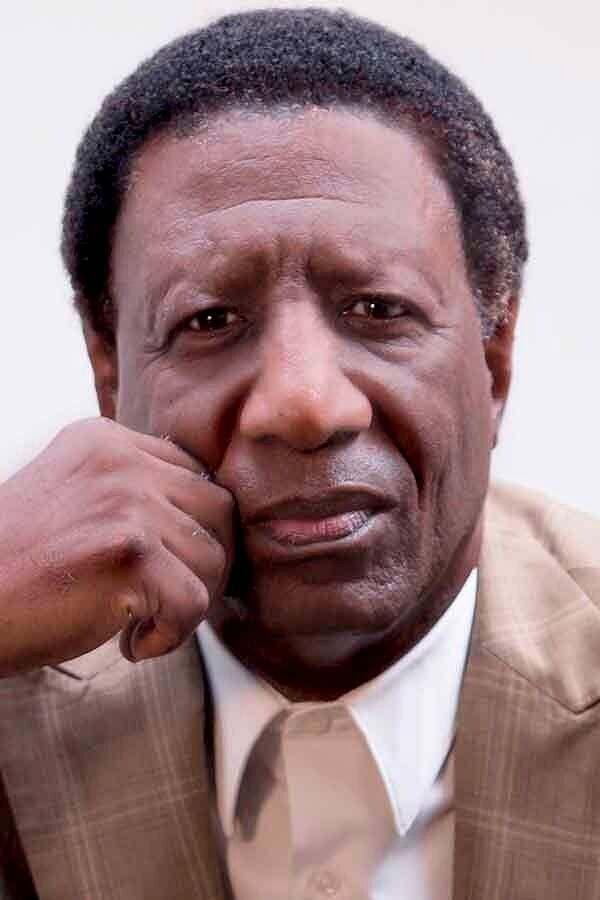 Wade Hudson, author of Defiant: Growing Up in the Jim Crow South, founded Just Us Books in 1988 with Cheryl Willis Hudson. Wade serves as president and CEO of the company. His career as a writer spans more than three decades and has resulted in more than 25 published books for children and young adults. They include Book of Black Heroes from A to Z, Jamal’s Busy Day, Pass It On: African American Poetry for Children, Powerful Words: Two Years of Outstanding Writing by African Americans, the Great Black Heroes series, The Underground Railroad and The Two Tyrones.


 Reload document
  Open in new tab